Inspired by the mood-elevating superfood, Kiwi aims to reinvent health care financing in Latin America, starting with Peru
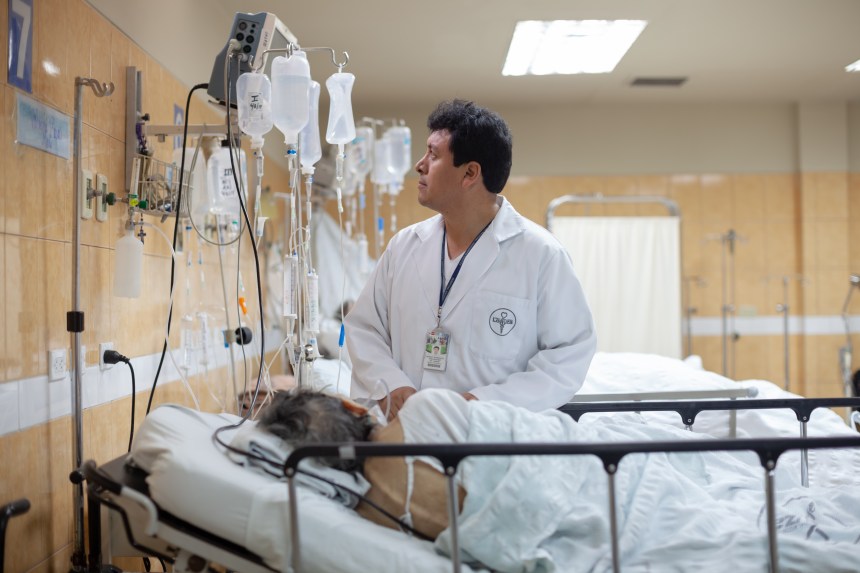
As Sebastian Chirinos tells it, access to health care in Peru sounds a lot better than it is. While it’s true that the system has made great strides since the country’s rending in the 1980s and 1990s – when Peru was plagued by a Pandora’s box of troubles from hyperinflation to domestic terrorism – wait times and distance remain obstacles to care.
The country boasts that 99% of the population is covered by health insurance – the majority administered by the Ministry of Health, while other Peruvians are covered by EsSalud (social security), the Armed Forces, the National Police, and the private sector, the last which covers 10% of the population. This environment would not appear to be fertile ground for introducing a new health care platform, but Sebastian, who was born in Peru, knows what’s under the surface both in his home country and throughout Latin America.
Sebastian says the 99% figure is inflated, reflecting only “bankable” people with formal employment who are accounted for on government rolls. Meanwhile, he says, more than 65% of Peruvians are viewed as “informal,” with limited access to clinics and “no access to credit or the private sector.”The so-called unbanked and underbanked people (those with little or no bank accounts) often have no place to turn. Alternative medicinal plants are sometimes used in the absence of modern care.
So, Sebastian cofounded the Miami-based health care platform Kiwi with his uncle Gabriel Chirinos, whom he says is more like a cousin since the two are only seven years apart. “I’m the crazy idea guy wanting to go into markets and explore more products,” Sebastian says, “while he brings me down to earth, and together we make it a reality by being cautious and precise.”
Kiwi provides two things: financing for medical equipment and cashflow at the clinics which sign into his network, and a buy-now-pay-later solution that finances out-of-pocket expenses for patients at the point of sale. “A lot of families rely on informal loans that charge more than 150% annually and have extreme default conditions that threaten the entire family economically,” Sebastian says. In contrast to these predatory lending practices, Kiwi charges far less – from 0 to 60% , though rarely that high. “We assign rates based on the probability of default, which reflects each patient’s willingness and ability to pay,” Sebastian says.

At the point of purchase (i.e. the clinic), the patient, with their treatment proposal in hand, selects Kiwi as their payment option. With a payment bill, utility, or bank statement, the patient’s information is uploaded into Kiwi’s system, and the credit is approved – or denied – while the patient is still in the clinic. “Kiwi pays the clinic upfront,” Sebastian explains, “and the financing deal is done with the patient.”
Given Peru’s patchwork health care system, Sebastian says the mission of Kiwi is not simply to fill in the gaps, but to be the platform of first choice.
The partners launched the company with $10 million in seed funding, backed by the U.S. company Healthcare Finance Direct (HFD). It now has roughly 100 clinics signed up across diverse specialties – including dental, ophthalmology, fertility, and aesthetics. Dental clinics represent almost half of Kiwi-network facilities, so it helps that HFD maintains a strategic alliance with Invisalign. “With Kiwi, we are on our way to creating a more equitable and accessible health care ecosystem that works for everyone,” Gabriel says. By year’s end, Kiwi expects to double its network to 200 clinics. According to Sebastian, “There are no other players doing this in Peru. We have no competitors.”
While Kiwi started in Peru, Sebastian has continental aspirations. “The numbers speak for themselves,” he says. “In Latin America, there’s a $60 billion out-of-pocket market, a $20 billion medical equipment market, and providers losing up to a third of patients due to lack of financing. Kiwi is built to unlock access to health care across Latin America.”
Kiwi plans to expand to Mexico in the first quarter of 2026 as part of a joint venture, focusing on both the local health care industry as well as a rapidly growing segment of medical tourism. Further strategic expansions are planned for Central America, including Panama, the Dominican Republic, Guatemala, and El Salvador.
As to why the Chirinos’ health care platform is called kiwi, the answer is natural chemistry. The kiwi is a superfood that is low in calories and exceptionally high in vitamin C. It packs more antioxidant punch than the apple, and is reported to reduce heart disease, blood pressure, and gastrointestinal issues. But it was the fruit’s ability to stave off depression that proved the real inspiration. “Kiwi is high in serotonin, which is the so-called happy hormone. Studies show if you eat two kiwis before bed, you’ll achieve a serotonin boost,” says Sebastian. “We’re using that metaphor to explain that, through Kiwi, there’s a means to happiness and self-esteem. When people are able to pay for a procedure they couldn’t pay for before, they can access happiness.”