


Synaptic Aviation’s AI tech is transforming airport efficiency, a few minutes at a time
In the complex world of aviation, where time counts and environmental sustainability is becoming paramount, one Miami-based technology company is reshaping how airports and airlines approach ground operations. Synaptic Aviation, led by industry veterans, is applying artificial intelligence to video and audio feeds to solve some of the most persistent challenges in airport efficiency.
Synaptic Aviation’s approach goes beyond simple data collection. Their system uses what they call computer vision– AI-analyzed video feeds – to capture real-time operational data, providing airlines with information that can be acted upon in real time. Information once tracked by people on clipboards can now be automated and available to airport and airline staff to make a difference on the fly.
Think of the ground crew at an airport gate like the pit crew in a car race. Instead of calling it “turnaround time” or “pitstop time,” it’s called “block time” – the taxi-in time to the arrival gate combined with the taxi-out time to the runway.
Synaptic Aviation’s technology can track every detail that contributes to an efficient turnaround, including baggage loading. Listening devices on the tarmac and at gates send alerts to staff about the performance of key equipment, including engines, landing gear, and ground power units (GPU), which supply electrical power to an aircraft while it’s on the ground. The AI-powered data collection can even detect if the sound made by engines and other equipment is an indication of damage and the need to repair or replace parts.
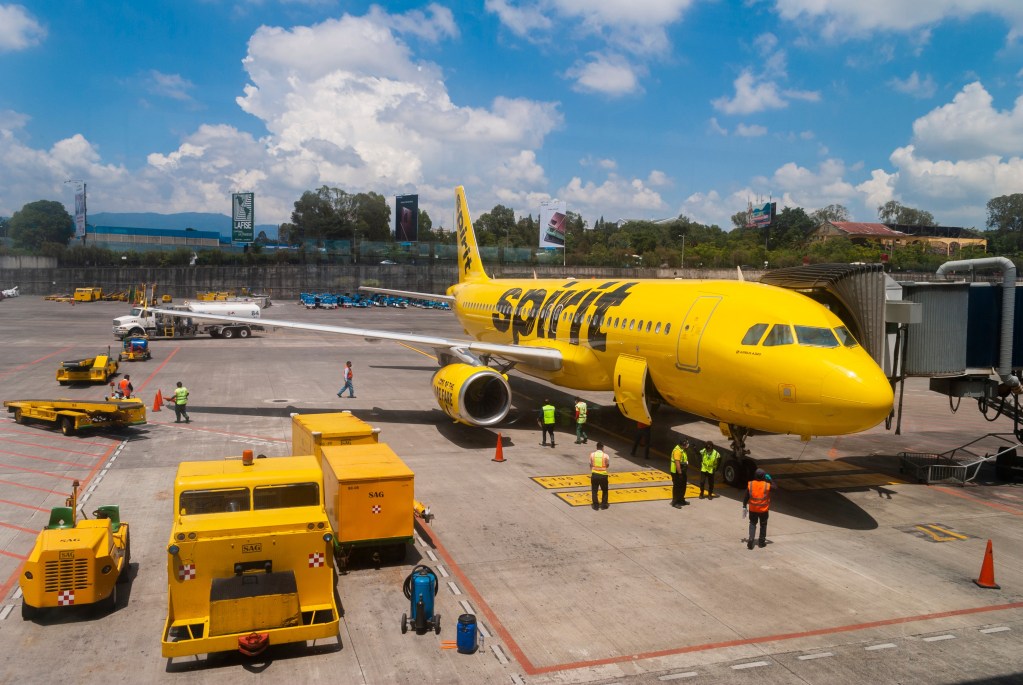
Recently, Synaptic Aviation implemented its technology via a partnership with British Airways’ parent company IAG, through their xBridge innovation program at Pittsburgh International Airport. The focus was on advancing tech solutions in categories that included customer experiences and safety. According to Synaptic, that real-world implementation will help them engineer a more secure environment for all airport stakeholders, at a time when safety routines on the ground are under stress from factors like labor shortages and the retirement of experienced crews.
“Our goal is to deliver critical data and real-time alerts that help mitigate delays, increase safety, reduce fuel burn, and optimize gate utilization,” says Sal Salman, Synaptic Aviation’s president and a pioneer in AI and computer vision, who has developed enterprise-level applications for numerous Fortune 500 companies.
PRECISION IN MOTION: THE TAXI-IN TIME CHALLENGE
Synaptic Aviation recently conducted a detailed five-month study exploring the operational performance of Spirit Airlines at a major U.S. airport. Its analysis captured 46 service activities per flight, uncovering that the taxi-in time for most arrivals was 4-7 minutes, with 14% of arrivals experiencing unexpectedly long taxi-in times.
By acting on the data in real time – using AI sensors to notify the ground crew, for example, that the plane has landed and is taxiing to the gate – the airline was able in one case to reduce to 9 minutes a taxi-in time that would have otherwise taken more than 20 minutes. On average, the airline achieved a remarkable 21% reduction in taxi-in times.
The financial and environmental implications of this are substantive: an estimated $43,600 in annual fuel savings per gate, with the potential to save more than $1.5 million when expanded to 35 gates. Most major carriers operate at more than 50 gates worldwide, increasing the potential cost savings to more than $2 million.
The business of aviation-related AI technology is projected to boom. The global market for aviation-related artificial intelligence was estimated at $223 million in 2022 and is forecast to grow to $914 million by 2028, according to Intellect Insight Journal.
OPTIMIZING POWER: GPU USAGE REVOLUTION
Another Synaptic study analyzed the connection times of ground power units (GPUs), uncovering the potential of substantial savings. The data was eye-opening: 12.5% of flights weren’t effectively using ground power, with airlines typically connecting to GPUs for less than 10 minutes. By growing GPU connection time to more than 80%, an airline could save more than $23,000 per gate annually. Again, when scaled to 50 gates, that means $1.15 million in annual fuel cost reductions.
These innovations are not just about cost savings. With the aviation industry committed to reducing carbon emissions, Synaptic Aviation’s technologies can directly contribute to sustainability efforts. By optimizing taxi times and reducing gas usage and engine emissions, the company is helping airlines minimize their environmental footprint.

Moreover, the benefits impact crew efficiency, maintenance scheduling, and overall operational safety, says David Neithardt, Synaptic Aviation’s CFO, chairman of the board and an investor in the company, with 30 years of experience in finance and private equity. “Airlines have a large number of aircraft, which are fixed assets,” he says. “We help them utilize those fixed assets more efficiently.”
As the industry moves toward the International Air Transport Association’s goal of net-zero emissions by 2050, companies like Synaptic Aviation are proving that AI technology can be a powerful catalyst, transforming raw data into actionable intelligence. In a world where every minute and every drop of fuel contributes to the bottom line, Synaptic is showing that the future of aviation can be smarter. dapibus leo.



