Seaboard Marine pioneers the use of Liquefied Natural Gas
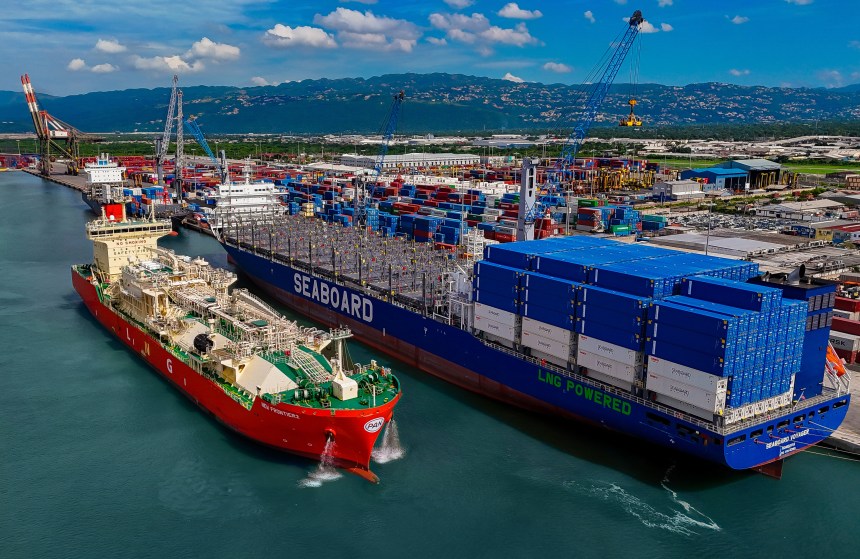
Long an innovator in cargo shipping, Miami-based Seaboard Marine is venturing into a new arena: alternative fuels. In 2023, the freight carrier became the first to fill up a containership at PortMiami with liquefied natural gas (LNG), a fuel that burns cleaner than diesel. Now, it’s integrating eight new and larger LNG-powered containerships into its growing fleet.
Seaboard Marine is part of a Fortune 500 company based in Kansas that is active in diverse businesses, including pork processing, grain trading, and shrimp farming. The parent company, Seaboard Corp., tops $9 billion in annual sales, employs 10,000-plus people worldwide, and trades its stock on Wall Street.
The ocean shipping unit launched in Miami in 1983, seeing opportunity in booming garment and electronics production in the Caribbean Basin and rising exports of fresh produce to the U.S. Today, it’s the biggest cargo carrier based in Miami-Dade County. The line operates some 20 ships serving 26 countries in the Americas, with 12 vessels calling regularly at PortMiami. It employs more than 370 at its headquarters in Medley (which it shares with logistics affiliate Seaboard Solutions) and at its 77-acre terminal at the port.
In March 2023, the freight carrier made headlines by purchasing the world’s first containership converted from diesel power to cleaner-burning LNG. That ship, retrofitted in 2017 and now called Seaboard Blue, filled up on LNG at PortMiami for its inaugural sailing to Honduras and Guatemala. Local officials celebrated the move as part of the seaport’s push for sustainability.
“Together with our shore-to-power project [which lets cruise ships plug into electricity on land, reducing emissions], “these investments continue to position PortMiami as an industry leader and help to ensure our community becomes future-ready,” said Miami-Dade Mayor Daniella Levine Cava.
In late 2024, the carrier began receiving the first of six large LNG-powered containerships due for delivery by 2026. Designed in Germany and built in China, each can hold roughly 3,500 TEUs (Twenty-foot Equivalent Units, i.e. containers of 20 feet each). That’s more than triple the capacity of its 1,000-TEU Seaboard Blue. Industry reports estimate the price for the three ships will top $180 million.
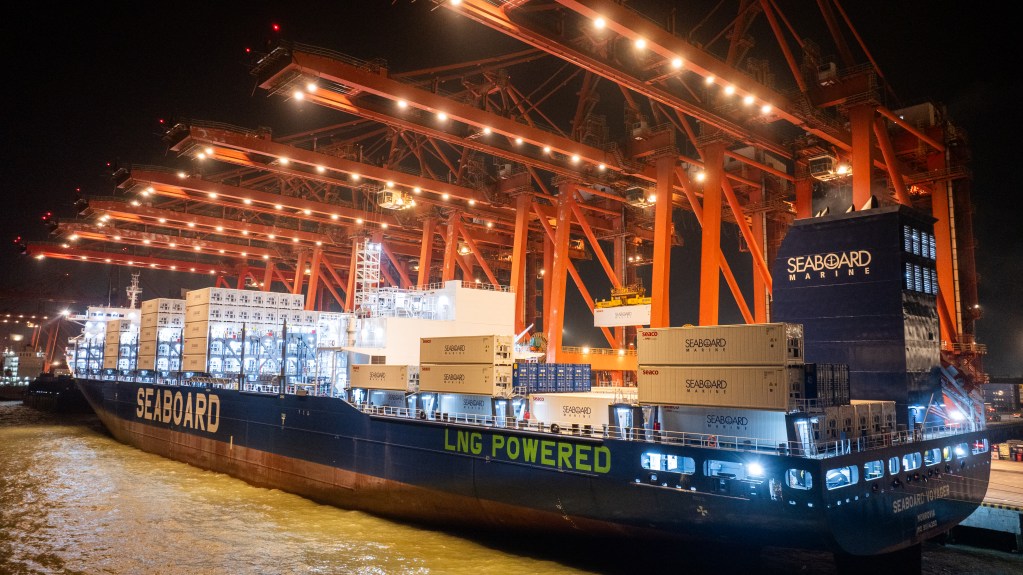
Seaboard Marine also expects delivery this year of two smaller LNG-powered vessels, each with a capacity of 1,450 TEUs, bringing its new LNG-powered fleet to eight, says Eddie Gonzalez, chief executive since 2005 and an employee with the line since 1992. “LNG-fueled vessels significantly reduce emissions, offering a cleaner alternative to traditional fuels and exceeding international emissions regulations that govern vessel usage,” Gonzalez told Global Miami. “This gives us a competitive advantage when offering our customers speed-to-market.” Studies show that ships burning LNG cut carbon dioxide emissions by about 25% and stop nearly all emissions of particulate matter, compared to using diesel or other conventional fuels. Cruise lines are also keen on LNG. More than half of the 40-plus new cruise vessels on order through 2028 are to be powered by the fuel, according to the Cruise Lines International Association.
Still, LNG is widely seen as a bridge fuel to even cleaner sources of energy, yet to be developed in financially viable ways at industry scale. Environmentalists cite concerns over LNG, including leakage of methane, a gas considered more harmful to the atmosphere than carbon dioxide. While sustainability was hardly a consideration when Seaboard Marine began in the 1980s, it is now key to its development. Beyond LNG-fueled ships, Gonzalez says, the carrier is installing solar panels at six of its support facilities in Latin America.