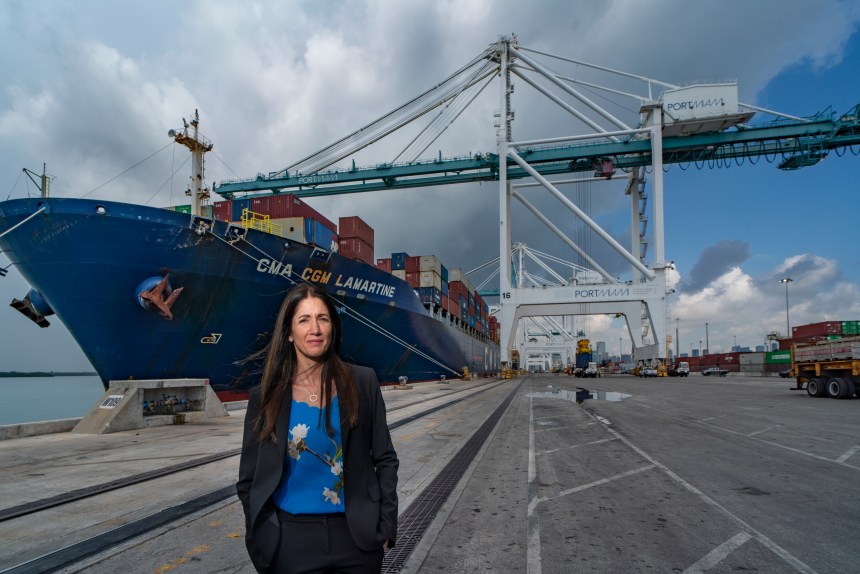
As companies look to shorten supply chains and diversify away from Asia, countries such as Mexico, Colombia, and the Dominican Republic are becoming increasingly attractive. Their proximity to the U.S. and deep trading relationships with South Florida make them prime partners. Already, Miami and Port Everglades are seeing new services emerge from these markets, reflecting a shifting geography of trade. For example, PortMiami’s officials noted a 12% increase in import volumes from Central America over the past year, largely due to nearshoring adjustments.
“We’re seeing some suppliers relocating operations from China to Guatemala and El Salvador – places that can reach our ports in under four days,” says PortMiami Director Hydi Webb. But with opportunity comes challenges. Real estate in Miami-Dade is increasingly scarce, pushing industrial development farther west.
Port Tampa Bay and Port Manatee are also building out capabilities, but South Florida’s unique position – both geographically and in its long-established trade relationships – continues to give it an edge.
Then there’s competition from outside the U.S. “Mexico will be the dominant player in this region if they continue to collaborate with the U.S.,” says Gary Goldfarb, chief strategy officer for Interport Logistics. “And Colombia isn’t far behind, especially in apparel and processed foods.”
In terms of sustainability, investors, customers, and regulators alike are pushing for greener operations. That means more electric trucks, more energy-efficient buildings, and more investment in carbon offsets and ESG reporting. At Port Everglades, a solar energy microgrid project is underway in partnership with Florida Power & Light, aimed at reducing emissions from terminal equipment.
Private developers are following suit. Prologis is piloting a new energy-efficient warehouse in Doral with solar roofing and EV-charging capacity for 40 delivery trucks. Meanwhile, Miami-Dade County has announced a green fleet program to electrify its county-owned cargo vehicles by 2028. “It’s no longer enough to be fast and efficient,” says Director Webb. “You’ve got to be clean, too.”