Few South Florida developers have left behind a comparable legacy of design
No U.S. city has seen the kind of vertical explosion that Miami has witnessed in the last two decades. A time-lapse film would show a city springing up like a cluster of mushrooms. Since 2005, some 15,000 vertical residential units have been built in a downtown area that would hardly qualify as a neighborhood in Manhattan.
With few exceptions, however, the buildings themselves have been underwhelming. Most follow a rectangular pattern designed to maximize utility and keep costs trimmed. There have been exceptions, of course, and several of the most architecturally noteworthy have been built by developer Ugo Colombo. While not the most prolific of South Florida’s builders, his 30-year career has been marked by a succession of high rises that are not only well built but well designed. What they all have in common is the curved line, buildings with rounded shapes. In a city of cereal boxes, they stand out.
Colombo began his foray into Miami real estate when he arrived from Milan, Italy, as a University of Miami student. At the tim, there was a slump in the market, and with some investment dollars assembled from friends and family, he was able to buy condominiums in distress sales, which he later flipped for outsized profits. After that, he formed the CMC Group and embarked on creating what, at the time, was arguably the first truly luxury condominium in Miami – Bristol Tower – though it was not the first condo high-rise on Miami’s Brickell Avenue.
That accolade belonged to The Atlantis, a 20-story building by Arquitectonica with a hole in the middle and a red triangle on top, which appeared in the opening credits of TV’s Miami Vice. Colombo’s tower was, at 40 stories, twice that height, and came with the kind of amenities that became luxury condo standards– private elevators, large units, expansive balconies, concierge service, security. Bristol Tower was a blue glass, white trimmed rocket ship, a cylindrical tube that remains a unique part of the Miami skyline today. And while it was a challenge to build – Colombo says he met with 450 lenders before finding a Japanese bank to finance it – it set the tone for his buildings to come.

Completed in 1993, Bristol Tower was designed by fellow UM alumni Luis Revuelta, the beginning of a partnership that saw the design of the Santa Maria on Brickell Avenue (1997), Porto Vita in Aventura (2004), Grovenor House in Coconut Grove (2006), Epic Residences & Hotel on the Miami River (2008), the Flat Iron building on Brickell Plaza (2019), and, most recently, the new Four Seasons residences in Coconut Grove, due for completion in 2027. With the exception of Grovenor House, which is uniquely angular, all the towers are curvilinear.
“I’ve had the privilege of working with Ugo for much of my career, and many of the most iconic buildings I’ve been a part of have been his developments,” says Revuelta. “As an architect, it’s incredibly rewarding to collaborate with someone who not only values quality and timeless design but consistently delivers on those ideals. Ugo is a true visionary… In a city full of glass towers, the buildings we have created together stand out.”
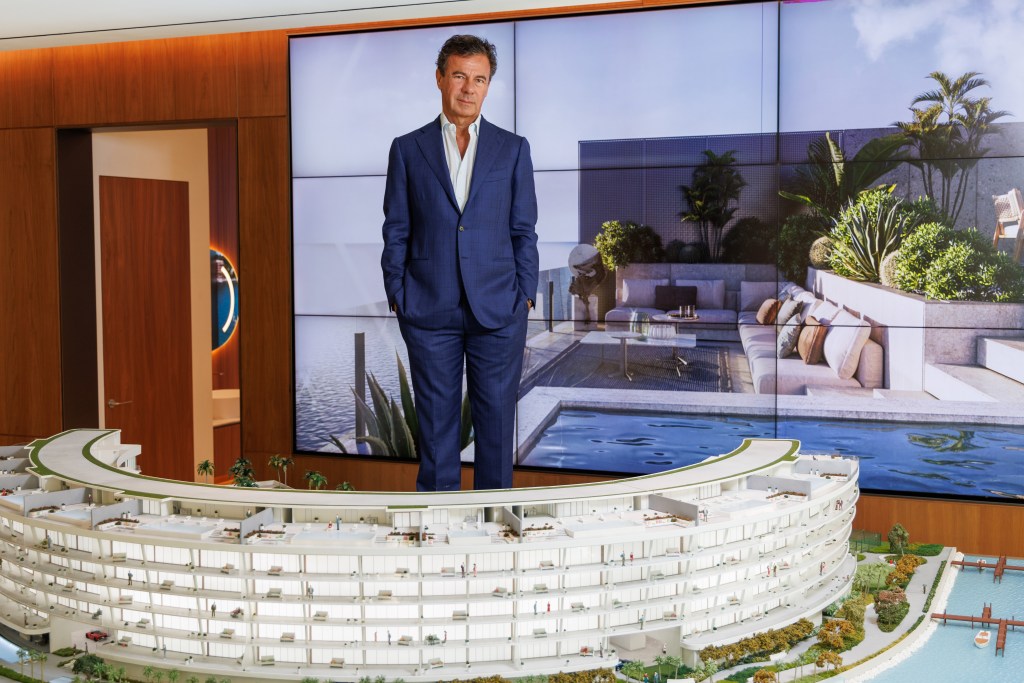
As for which of the projects is his favorite, says Colombo: “Bristol was the first one, but my favorite is Santa Maria. That’s a building that, you know, you couldn’t duplicate today, because on the same five acres of land today, you would build three buildings there instead of one. You would have to build three buildings instead of one.” Among other things, Colombo left the original mansion from the 1920s standing on the property, turning it into a clubhouse for residents.
A MATTER OF LIFESTYLE
One of the first things you realize in talking with Colombo is that he is not driven by the pursuit of profits. He is rather a person who works to enjoy life. He is a family man, married to Sara Colombo (who owns the interior design shop NEST CASA in Miami), with whom he has three children. He loves to travel, and to pursue his hobbies. For year, he was an avid motorcyclist until South Florida traffic and the decision to have a family moved him in the direction of exotic cars– one reason he invested in the Collection, a luxury automobile dealership he acquired in 1994 after it was seized by U.S. marshals during a drug prosecution case.
The Coral Gables-based dealership specializes in elite brands such as McLaren, Land Rover, Maserati, Aston Martin, Lamborghini, and Porsche. Since then, he has opened a Jaguar dealership, an Audi dealership, and a Lamborghini dealership, the first in Coral Gables and the other two in South Miami-Dade’s Palmetto Bay.
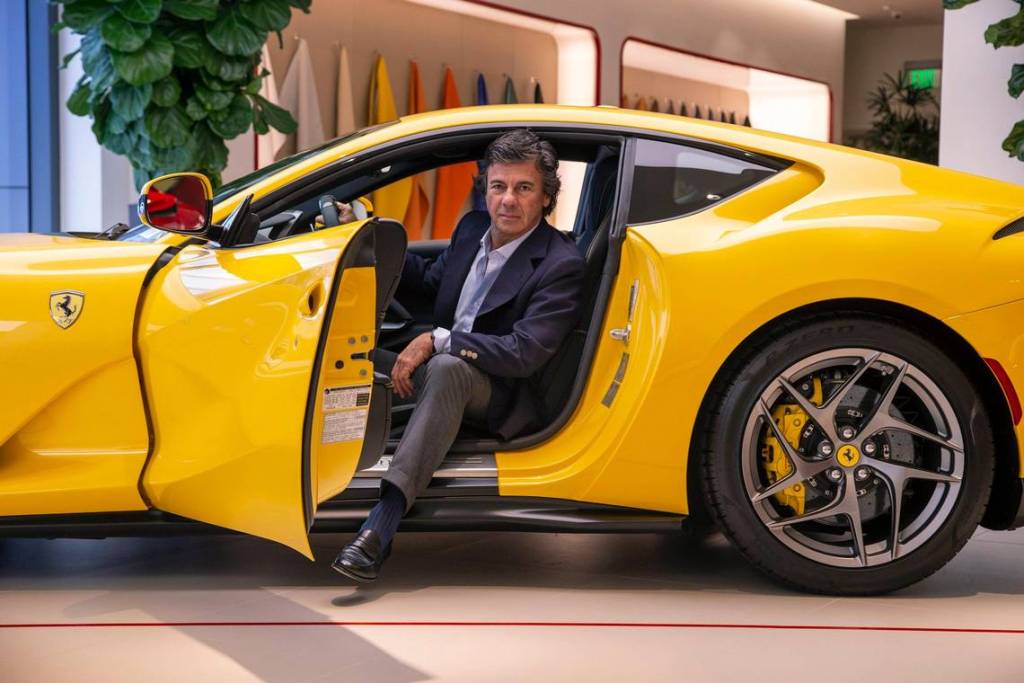
All of this keeps Colombo busy on the job, but does not mean he finds work a burden. On the contrary, “I enjoy what I do,” he says. “Yeah, I could say I like to live being on vacation, and playing, but I could not live being only on vacation, just as I could not live only working. It’s fifty-fifty. I couldn’t wake up in the morning thinking, ‘What I’m going to do today is go to the beach. ’The driver is not the money, per se, it’s that I enjoy seeing a concept go from being a concept to something concrete, to a building… making money is ancillary to happiness in life.” Today, Colombo is finishing the buildout of his Vita project on Grove Isle in Coconut Grove.
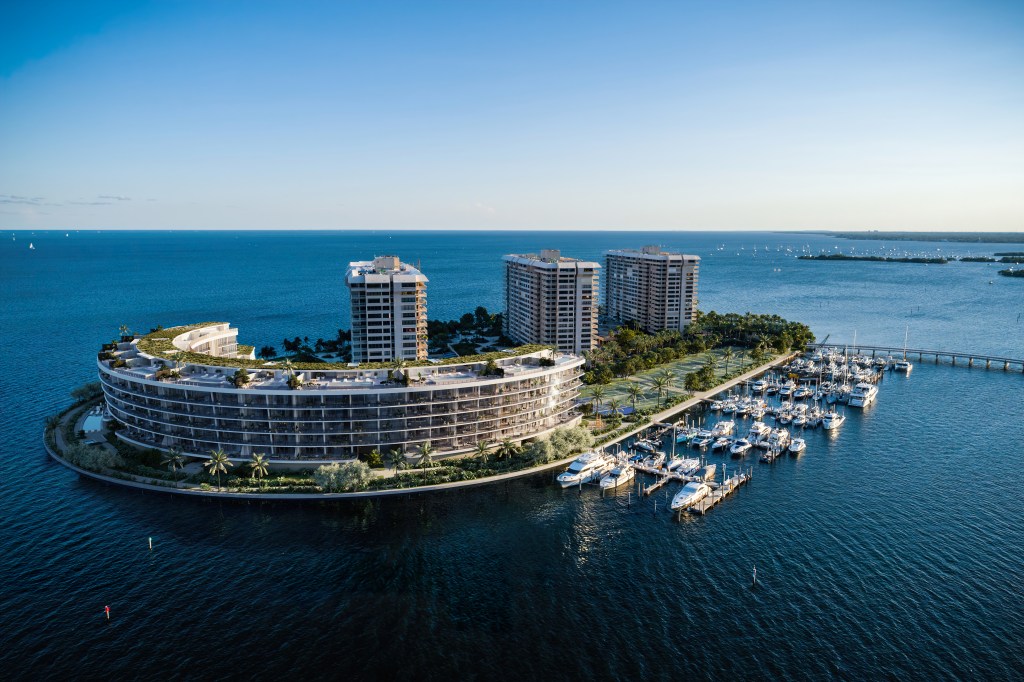
Previously, the only good view of this island was from the island itself, where developer Marty Margolies had constructed four identical Wheaties-box high-rise condos, about as attractive as slabs of Soviet worker housing. Now, instead, there will be a huge, curved semi-circle of condos, sheathed in the blue glass and metal that Colombo uses, for aesthetic reasons, instead of concrete (he was a founder of Glasswall, a company which produces impact-resistant glass for use in high-rises). On the day we got a tour of Vita by Colombo he was pleased with the progress and the look of the place, which is nearly complete, but slightly annoyed that he had to depart for Italy the next day to fill in for an executive who quit, and who was supposed to oversee the purchasing of interior furnishings. With no one he could immediately trust to make the right choices, he decided to go himself.
But that is Colombo’s forte, to focus on detail, which is only possible when you are doing one building at a time, every few years. For Colombo, part of the satisfaction is “knowing that people are glad about what they purchase.”
Asked what the secret to business success is, Colombo replies: “First, you’ve got to be lucky, to be in the right place at the right time. But then, when the door opens, when the opportunity presents itself, you need to get it, because you can’t just let the opportunity pass in front of you. You need the initiative to seize the opportunity.”
For Colombo, that next opportunity is his upcoming project, the branded Four Seasons Residences, following the latest lifestyle trend of linking buildings with luxury brands. “This is my first branded building,” he says. “I’ve always been interested in doing that. I’ve always wanted to have something that really correlates to lifestyle, to be branded. I think I’m the last developer in line to do that, but I thought the marriage with the Four Seasons was a perfect combination.” For this round, Colombo is collaborating with Fort Partners, which previously developed four other Four Seasons properties in Palm Beach, Fort Lauderdale, Surfside, and Miami.
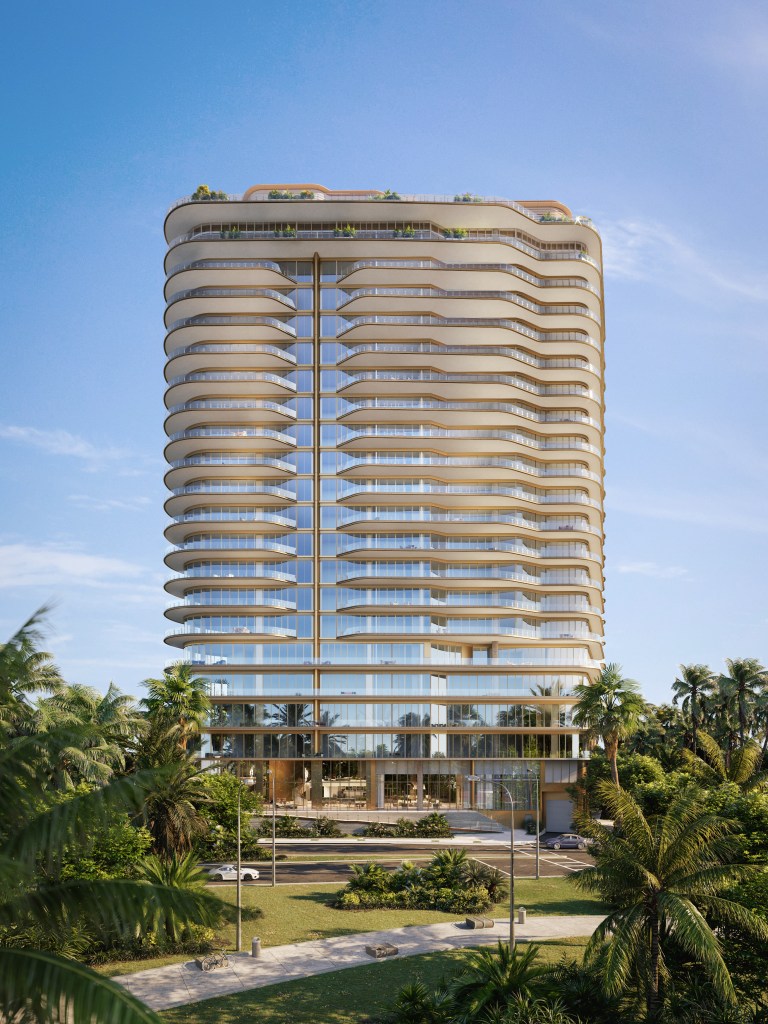
In some ways, the latest project goes back to Colombo’s first foray into luxury condominiums, but this time on steroids. “They have a whole service team,” he says. “When you’re a Four Seasons owner, you’re part of a concierge system where, whatever you need in the world, you have priority reservations…. If you want to go to Budapest, and you need something in Budapest, there is a Four Seasons there. They have this whole network that provides all the services worldwide. And in the building – they manage the building – they have very strict rules about what services are provided, and they have trained personnel, which is another big advantage, that the concierge is not coming from wherever but is going to be a Four Seasons-trained concierge.”
While he will probably not live there, the amplified lifestyle aspect of the Four Seasons, including its global travel network, was one of its appeals.
“You know, I like to enjoy my life,” he says, “I like bowling, I like doing things with my wife and friends, maybe too much. I don’t have any vices. I think travel and being with friends and going to events and stuff like that is maybe my guilty pleasure.”