How old is your rescue pet? EpiPaws’ DNA test, now going global, will tell you
When Andria Beal was working on her doctorate in biology at Florida International University, she developed the first test to determine the age of dolphins. In 2021, after she received her Ph.D. in epigenetics – the field of biology that studies how environment and behavior affect DNA – Beal decided to apply her skill to other animals. So, in 202, she started EpiPaws, a company that tells pet owners how old their rescue dogs and cats are.
The idea is that people who buy cats and dogs from a pet home or an animal shelter – and more than 4 million pets are adopted nationwide each year – often have no idea how old Tabby or Fido may be.
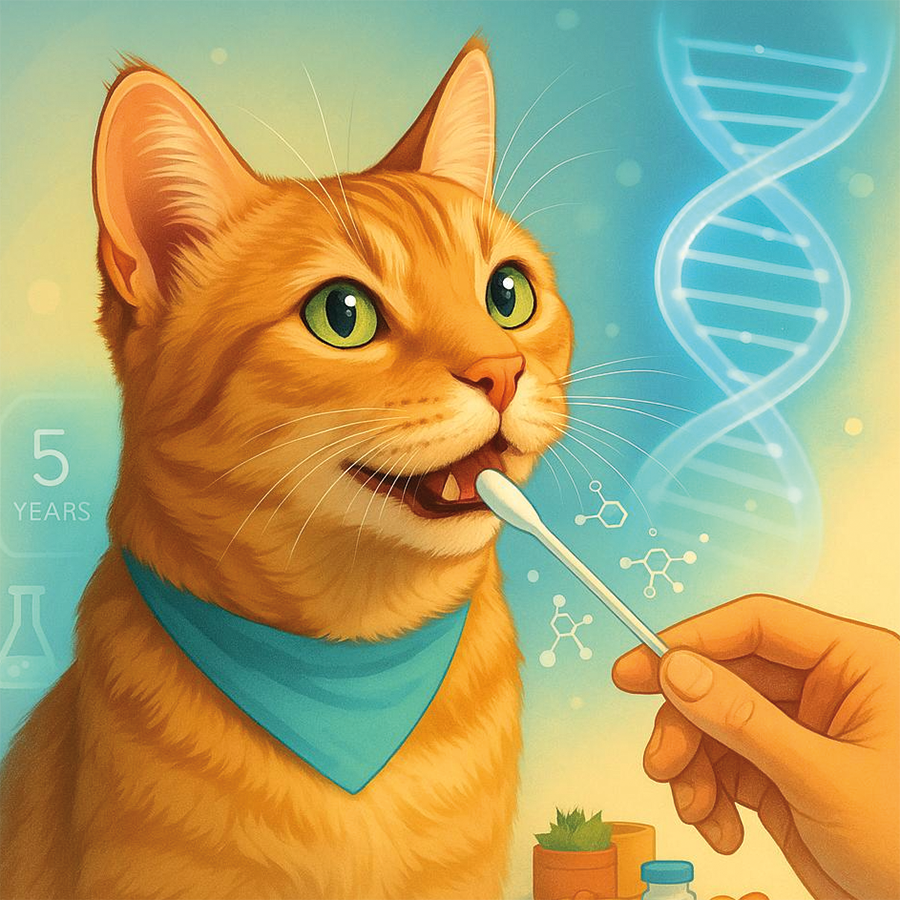
“When I thought about making a test for rescue dogs and cats, I realized there was a massive market opportunity that no one was addressing,” says Beal. The test uses a mouth swab for dogs and cats and identifies DNA methylation, a molecule that attaches to DNA. “We measure how much of this molecule occurs at certain areas of the DNA, and this is how we can tell how old an animal is,” Beal explains. “About 75% of samples come within five months of the actual age.” The rest come within plus or minus 12 months of the actual age.

Using her own funds, Beal set up EpiPaws in Fort Lauderdale with $30,000. When she started, Beal did everything herself: She built the test kit, designed the product box, put the boxes together, and started promoting EpiPaws on social media. Each Pet Age Test, which retails for $120, is mailed to pet owners, who swab their animal’s mouth and send the swab in a sealed container to Beal’s lab in Fort Lauderdale. So far, Beal has performed more than 1,500 tests, mostly in the U.S. but also for clients in Australia, Singapore, and Korea. While Beal remains the sole employee, she now has five advisors and four part-time consultants.
Beal is also launching a new product that measures the aging rate for all cats and dogs, helping owners to identify factors like food, exercise, medicines, and stressors that affect their health and measure disease development. This will allow pet owners to provide the correct food, exercise regimen, and health care for animals as they age.
Beal has already raised $150,000 from two angel investors and is seeking more capital to expand. In addition to revenue from individual tests, EpiPaws is working with veterinarians and has partnered with Hill’s Pet Nutrition. Beal is also talking to other pet food and pharmaceutical companies, and while there are other epigenetic tests for dogs, Beal’s test for cats is the first of its kind.
“EpiPaws and its founder are a good example of an entrepreneur seeing a need in the marketplace and using unique technologies to address this need,” says Jaap Donath, Ph. D., Assistant Executive Director for Programs at the Alan B. Levan – NSU Broward Center of Innovation. Two Levan Center innovation programs helped Beal with topics such as legal, finance, marketing, fundraising, and pitching to investors. “EpiPaws is generating revenue because Andria did a lot of customer discovery to make sure there is a need, understood how to price her product, and had a strategy to get to her customers,” Donath says.