Miami takes a dominant role in the importation of fresh flowers in the U.S.
Every year, as Valentine’s Day approaches, the cargo holds of Avianca’s freighters transform into airborne greenhouses, packed with millions of delicate stems destined for lovers and florists across North America. This year was no different. The Colombian carrier, one of the largest movers of fresh-cut flowers in the world, saw another bustling season, transporting more than 18,000 tons of flowers between January and February. In the weeks leading up to February 14, MIA processed approximately 940 million stems of cut flowers, with about 1,500 tons arriving daily.
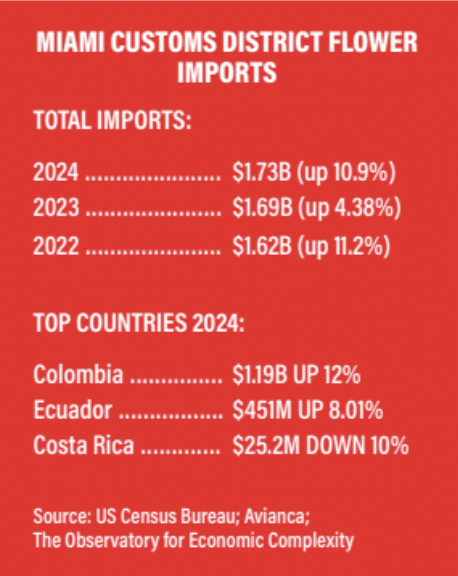
But the business of blooms extends far beyond a single holiday. The Miami Customs District, which handles more than 90 percent of all fresh-cut flower imports into the U.S., saw another year of significant growth in 2024, with total imports reaching $1.73 billion, marking a 10.9 percent increase from the previous year.
Leading the charge was Colombia, which exported $1.19 billion worth of flowers through Miami, a 12 percent increase from 2023. The South American nation remains the undisputed leader in the industry, supplying nearly 70 percent of all flowers imported through the Miami Customs District. The country’s high-altitude farms, ideal growing conditions, and strong supply chain networks – coupled with efficient air freight operations from carriers like Avianca – have all contributed to its dominance.
Ecuador, another floral powerhouse, recorded $451 million in flower exports to Miami, up 8.01 percent from the previous year. While smaller in volume compared to Colombia, Ecuadorian flowers — particularly roses— are prized for their larger blooms and vibrant colors, making them a staple for luxury floral arrangements and premium markets. Costa Rica remains a market but saw a 10 percent decline to $25.2 million, as it faced stronger competition from its larger South American counterparts.
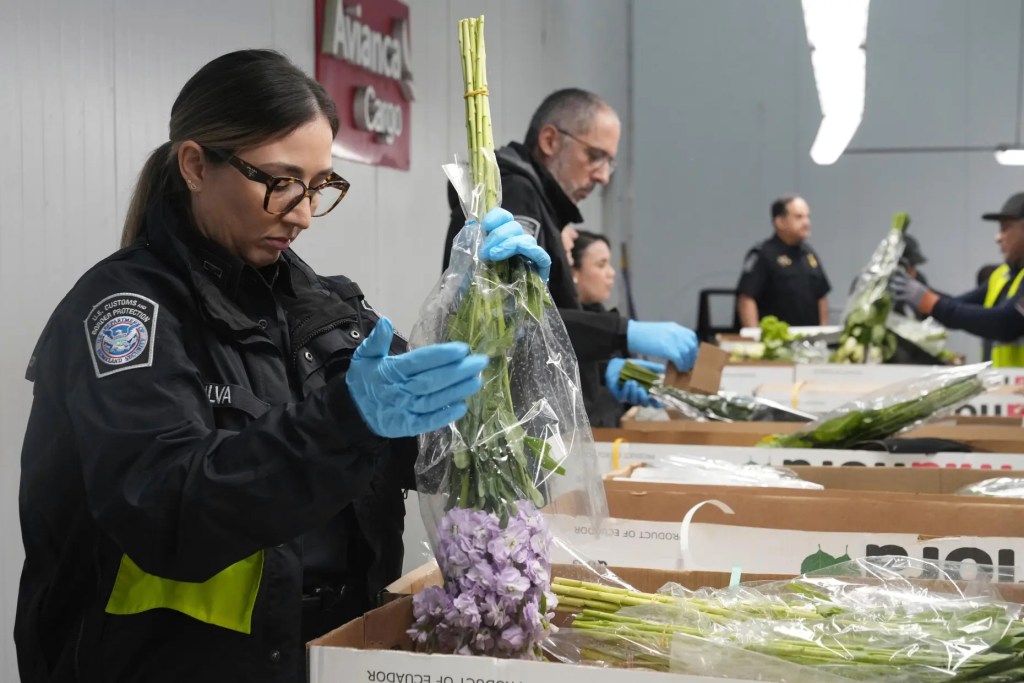
For Avianca, the floral trade has been a boon. In the three weeks preceding Valentine’s Day 2025, the airline operated around 300 cargo flights, transporting approximately 18,000 tons of flowers from Colombia and Ecuador to Miami. To manage this increased demand, Avianca Cargo doubled its regular capacity, investing in infrastructure enhancements and expanding its U.S. operations workforce by 30 percent. These efforts led to a 57 percent reduction in flower processing and delivery times in Miami, ensuring that fresher blooms reached consumers more swiftly.
The remarkable efficiency of Miami’s flower trade is due in large part to its cold-chain logistics infrastructure. Upon arrival at Miami International Airport, flowers are swiftly processed at specialized cold storage facilities, inspected by U.S. Customs and Border Protection, and distributed across the country – often reaching their final destination within 48 hours of landing.
Despite rising demand, the industry faces ongoing challenges, including higher freight costs, labor shortages, and the potential impact of climate change on flower-growing regions. Nevertheless, the sector continues to thrive, leveraging Miami’s strategic location and its deep connections with Latin America’s agricultural powerhouses.