


Art Miami now generates more than half a billion dollars in economic impact
When Art Miami first launched back in 1990, it was one of only three or four major art fairs in the U.S., and it was strictly domestic. It was an important show, but nothing close to its current iteration, which was turbocharged by the addition of Art Basel Miami Beach in 2002, the U.S. version of Switzerland’s Art Basel fair The result: the December 2024 edition of what’s now called Art Week Miami attracted 75,000 spectators and generated $547 million in economic activity. At the Art Basel Miami Beach fair alone, there were 286 participating galleries from the Americas, Europe, and Asia.
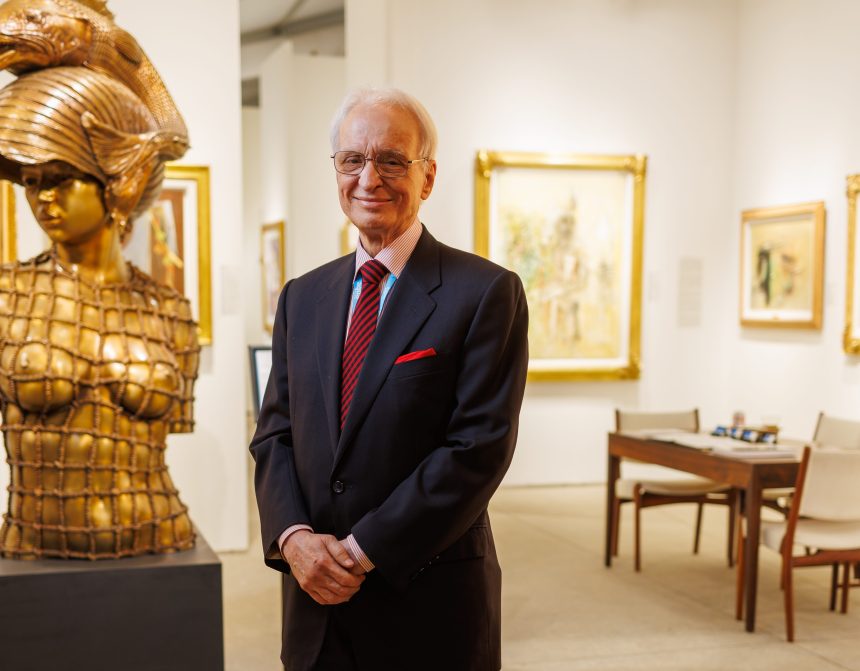
“It used to be that these fairs would attract specific collectors,” says Ramon Cernuda, whose Cernuda Gallery has exhibited at Art Miami for 20 years. “It was a reference point for what was happening in art in Miami, for the art collector class. They would come in their own jets and stay for two or three days.” Now, says Cernuda, people are spending a week or two in Miami for the art showcase. “Maybe it’s the climate, maybe it’s the fact that it is now such an enormous party, with 19 different shows, and all the museums and various institutions doing special events for Art Week. It’s crazy.”
The Cernuda Gallery exhibited its collection of Cuban Artists at Context Art Miami, one of the sister fairs, which launched in 2012. Along with Cernuda were another 60+ galleries in an enormous tent by Biscayne Bay in downtown Miami. Not far from his gallery footprint was a display of works from the Opera Gallery in Miami’s Design District, which included paintings and sculptures by such greats as Picasso, Botero, Calder, Chagall, Dubuffe, and many others.
Founded originally in Singapore in 1994, Opera Gallery has since grown to 16 locations worldwide, including in Hong Kong, Dubai, Paris, Madrid, Geneva, London, New York, and two in South Florida; its initial Miami gallery opened in Bal Harbour in 2002, the same year that Art Basel Miami Beach was launched. “This show is good for us, you know, we have a good base of collectors,” said Gilles Dyan, the founder and chairman of Opera Gallery, who was at the Context exhibition. “We have many people who come from all over the world [to South Florida] from Thanksgiving to the end of February, but there are many people who buy only during the shows.”
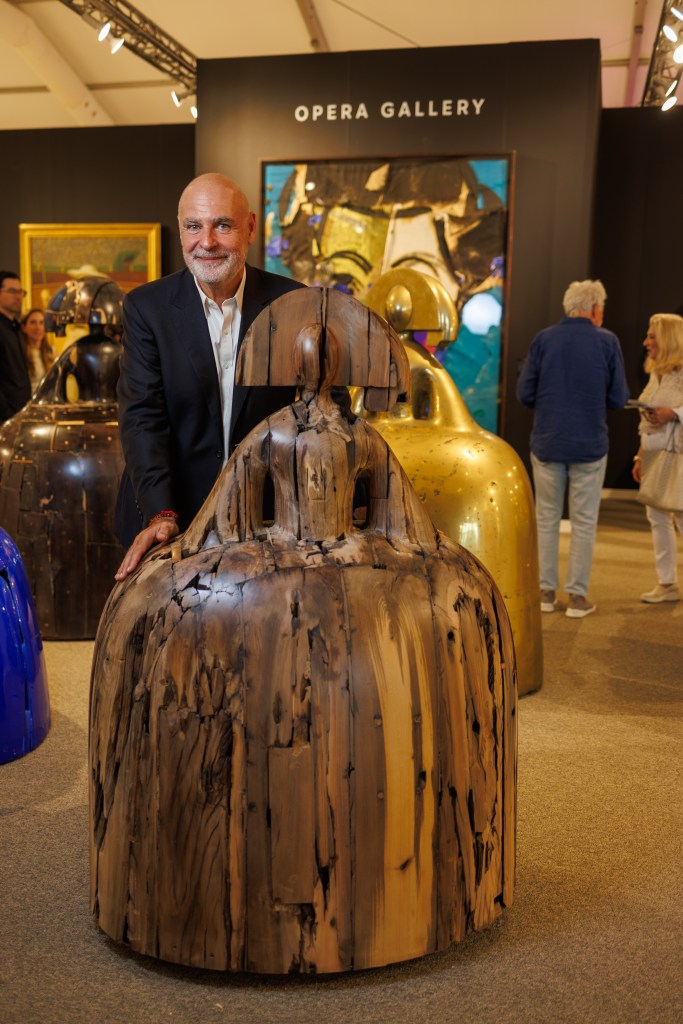
When we spoke with Dyan, he had sold paintings and sculptures by Spanish artist Manolo Valdés and “a very nice sculpture by [Jean] Dubuffet.” He was close to selling one of his paintings by Chagall; two hanging on the wall were valued at $1.1 million and $1.4 million respectively. While the gallery represents several up-and-coming artists, whose works sell for between $15,000 and $50,000, they also had a $12 million Picasso for sale.

In a testament to Miami’s growing importance in the art world, Dyan keeps a home in Bal Harbour; his children and grandchildren live in Miami as well. While he travels almost constantly among the cities where there are Opera Galleries (“I have a gypsy life”) he spends three months each year in Miami.
“Art Miami arguably laid the groundwork for the city’s reputation, to be forever shifted in 2002 when the first iteration of Art Basel launched in South Beach,” says Opera Gallery’s Miami Director, Dan Benchetrit. Now seen as the gateway between North and South America, “Miami’s role in the art world has outgrown its reputation as being a mere host to Art Basel.”
That may be so, but the advent of Art Basel, and its acceleration of Art Miami Week, is nothing less than phenomenal. Its economic impact rose an estimated 9.4% last year alone. “It’s really unique in the world,” says Cernuda. “If you look around, nobody, not even New York, has something like this. Paris? Forget it. They have one fair, maybe two. That’s it. 19 fairs at the same time? It makes your head spin.”



