How to succeed in the U.S.: “Make Yourself Local”
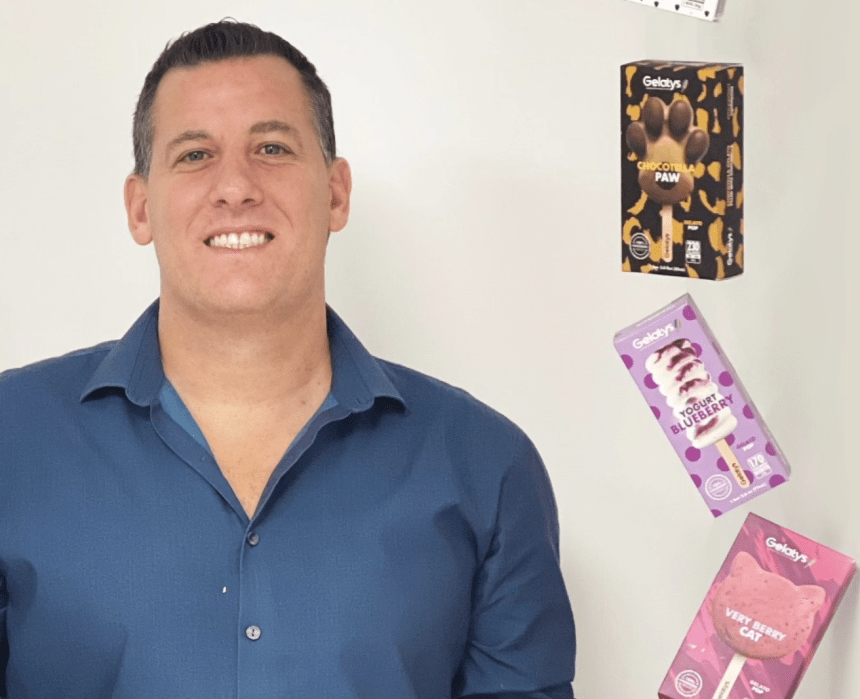
When Chilean entrepreneur Adolfo Heller Cohen set up his gelato business in Miami, he planned to make it by selling from kiosks at shopping malls. But a couple years in, he realized he’d be better off retailing at supermarkets where volumes were greater. He reached out to the head of Whole Foods in Florida, a fellow Chilean, and emailed him 20 times – to no avail. Finally, Heller showed up at an event where the Whole Foods chief was speaking and asked him for an appointment. Soon, Heller was selling in some Whole Foods stores. Today, his Gelatys business is thriving at numerous supermarket chains in many states, prompting an expansion of his Miami factory.
Heller told that story to a recent business mission from Chile to make two points about how to succeed in the U.S. First, be persistent to reach the person you want. And second, be present in the U.S. to adapt as needed in a market you’re just getting to know. “The key to success is to be with someone local who understands the market,” someone with strong local experience and local contacts, says Heller. That might mean hiring that local person as an advisor or on staff or simply asking that person for assistance: “People are willing to help here,” he says. Indeed, that now-retired Whole Foods executive, Juan Nuñez, serves on a retail advisory board that Heller has created at the Miami-based Chile-U.S. Chamber of Commerce.
“Make Yourself Local” was the slogan for the delegation Heller addressed, a group of some dozen small and mid-sized companies visiting Miami in November, organized by the American Chamber of Commerce in Chile (AmChamChile.) Other speakers shared with visitors how U.S. business differs from elsewhere, with more litigation, for example, requiring legal assistance on issues from how to incorporate to ways to protect intellectual property.
Kevin Morales Chamorro can attest to the differences. A medical doctor from Nicaragua, he moved to business-friendly Chile, partly because of incentives for entrepreneurs going global. His company MedETechni makes a device to treat skin ulcers, using a certain spectrum of ultraviolet radiation. He says the radiation – just five minutes, twice a week – can treat ulcers in one month, compared to six months for conventional methods. His devices are now used in a few Latin American nations.
To sell in the U.S., Morales Chamorro says he needed to register his device with the U.S. Food and Drug Administration. In Miami, he was curious to learn, among other things, how U.S. health insurance might handle payments and how best to engage with U.S. clinics and hospitals. “We’re interested in Miami, because Miami is an early adopter,” says the 28-year-old entrepreneur on the business mission.
Chile, a slender nation of 20 million people that has long boasted South America’s most developed economy, is known for its traditional exports, especially farmed salmon, grapes, wine, and copper. But the Pacific Coast nation is becoming an innovation hub, sparking more Chilean agribusiness and tech companies to expand overseas, with Miami their top U.S. destination.
The companies are lured partly by the trend toward “nearshoring,” the U.S. push to buy more from neighbors in the Americas rather than China, says Liane Ventura, senior vice president of the Greater Miami Chamber of Commerce. That trend began with supply-chain disruptions during the Covid pandemic and has deepened with U.S.-China tensions are likely to rise under the Trump administration.
Entrepreneur Heller of Gelatys says that in seven years in Miami he’s found it vital to be hands-on in the U.S. market. “Because something worked in Chile doesn’t mean it will work here,” Heller says. “In the U.S., test small and quick, and if needed, pivot fast.”