


Miami-Dade’s International Trade Consortium is all about creating global links
Earlier this year, a delegation of 50 embarked on a 10-day mission to Tokyo, Yokohama, and Kyoto, featuring a distinguished group of local leaders. Among them were Miami-Dade Mayor Daniella Levine Cava, Miami International Airport Director Ralph Cutie, Beacon Council CEO Rod Miller, and County Commissioners Juan Carlos Bermudez, Marliene Bastien, and Kevin Cabrera. The private sector was also well-represented by key players such as Teco Energy, law firm Becker & Poliakoff, American Airlines, and PMI Global Services. All told, 30 private sector representatives joined 20 government officials on the trip. And the organizer behindthe trade mission? The International Trade Consortium (ITC) of Miami-Dade County.
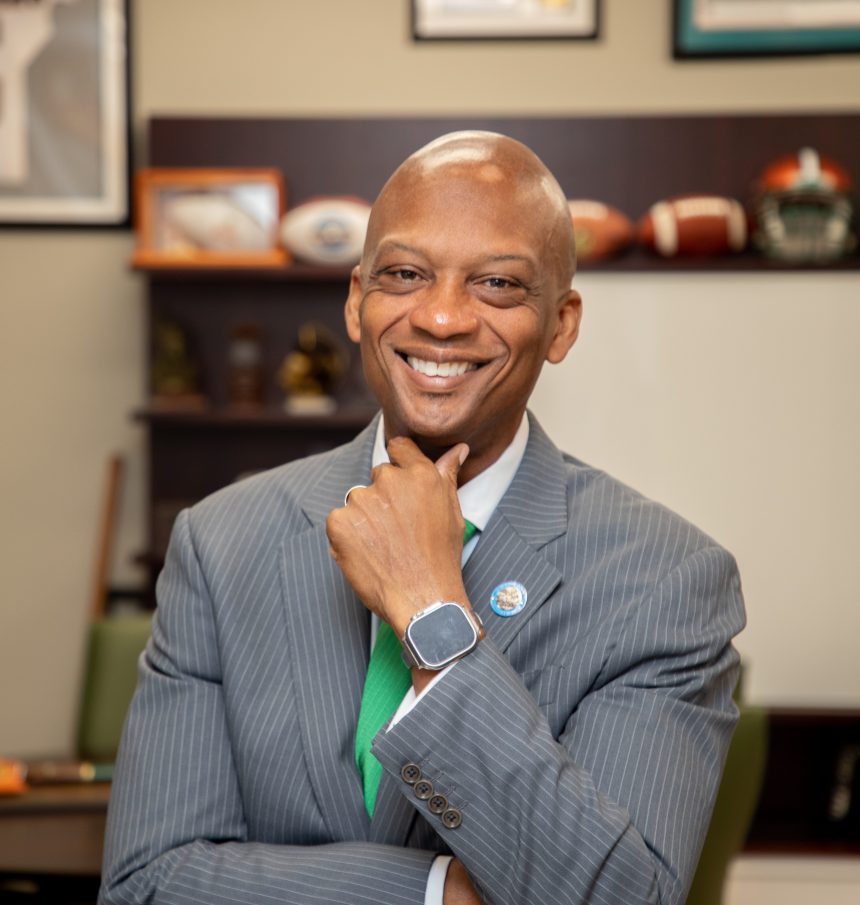
“We need folks in other places… We want those markets open to us, and we want to be open to those markets,” explains ITC Chairman and County Commissioner Oliver Gilbert. Led by Gilbert, the ITC is one of the driving forces behind the county’s efforts to grow its global footprint, tasked with fostering international economic ties and promoting local businesses abroad. In addition to Japan, in recent years the ITC has organized trade missions to South Africa, Colombia, the UK, Ireland, and France, among others.
In Johannesburg, ITC introduced South Africa’s Graduate Institute of Financial Sciences (GIFS) to the Florida-based Financial International Business Association (FIBA) and the Beacon Council, the county’s economic development agency. The goal was to explore a potential public-private partnership for opening a GIFS office in Miami, enhancing South Florida’s financial sector. In Colombia, the ITC played a pivotal role In Colombia, the ITC played a pivotal role in the ratification of a Sister Port Agreement between PortMiami and the Port of Barranquilla while teaming up with the Greater Miami Chamber of Commerce in convincing AmCham Barranquilla to open a trade office in Miami.
Gilbert stepped into the ITC role as part of his broader duties as a county commissioner. “When I became the County Commission chair, I assumed the role of chairperson for the ITC,” he said, part of a larger Miami-Dade effort to align local businesses with global markets. Gilbert says the trade missions which the consortium organizes are crucial for attracting foreign investment. “It’s creating jobs here, and it’s creating the economic movement we need to actually grow our economy.”
For example, after the Japan mission, Noven Pharmaceuticals opened an office in Miami, creating high-paying jobs in the healthcare sector. After the mission to Paris, PortMiami began collaborating with French shipping company CMA CGM on their expansion plans for ZeBox, an incubator fostering innovation in supply chain management and logistics.
The ITC’s activities often overlap with other local organizations like the Beacon Council and the Greater Miami Chamber of Commerce, but the goal remains the same: promoting Miami-Dade County as an international business hub. “We’re all going with the same core mission,” says Gilbert.
One of the biggest hurdles for Miami, and for the ITC, is navigating the unpredictable nature of international politics and trade policies. “Tariffs are very dangerous,” says Gilbert, noting that Miami’s position as a major trade gateway means it’s especially vulnerable to retaliatory measures. “You don’t think about that tariff as that longshoreman not having a job…but that’s exactly what happens.”
For now, the ITC continues to push ahead with its trade missions, working in tandem with local businesses and international partners. But the task of cementing Miami-Dade’s place on the world stage is far from complete. “Miami is still young,” says Gilbert. “But it’s hungry.”



