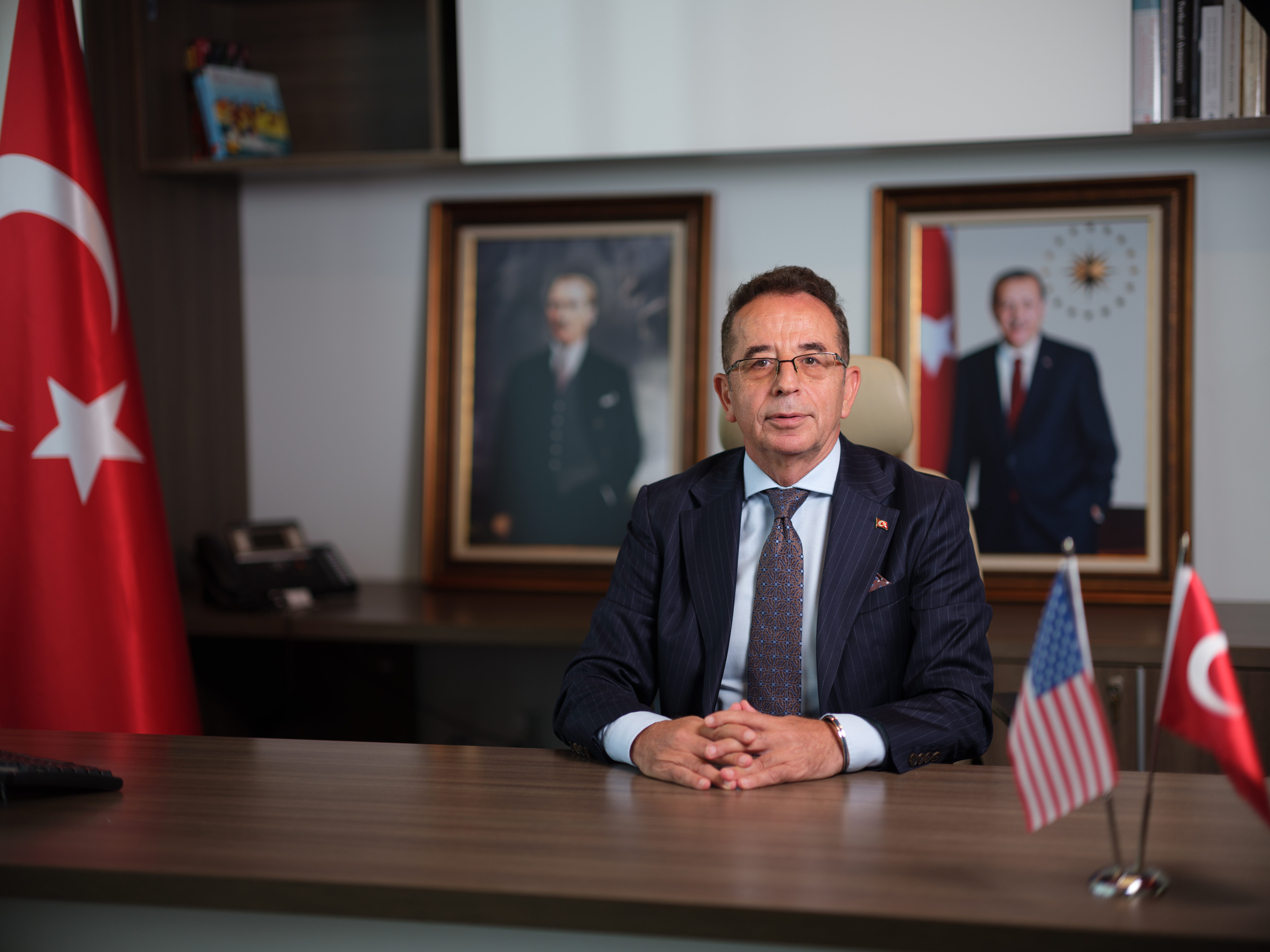
Consul General Resul Şahinol came to Miami in October 2023 after previously holding the position of Deputy Chief of Mission at the Turkish embassy in Washington. Following a ten-month period as Miami’s Chargé d’Affaires, he was officially named Consul General of the Republic of Türkiye in Miami in early August. Last year, trade between Türkiye and the Miami Customs District exceeded $1.1 billion, mostly imports. For the Consul’s entire area of jurisdiction, trade exceeded $5.5 billion.
How do you compare Washington DC, to Miami?
It’s totally different. Washington DC, mainly focuses on the bilateral relations between Türkiye and the United States, with political issues dominating the agenda. Although Türkiye and the U.S. are longstanding allies with good cooperation, there are still challenges in the relationship. In contrast, my role in Miami is quite different. I don’t deal with political issues but focus on the Turkish-American community in my jurisdiction, which includes North Carolina, Georgia, South Carolina, Florida, and Puerto Rico. I engage with the community by visiting their offices, workplaces, and factories to extend our support.
Can you describe the Turkish community here in South Florida?
It’s more than quantity, we are about quality. While the Turkish-American community is smaller compared to the Latin-American diaspora, it is notable for its quality. We have around 27,000 registered Turkish-Americans in my jurisdiction, many of whom are investors and business owners. They are active in economic life and contribute significantly. We support all Turkish people including businesspeople, investors, academicians, and artists coming from Türkiye to the U.S., looking for better business opportunities. For example, a cosmetic company here imports products from Istanbul and has recently invested around $2 billion in Latin America. We also have companies in construction, transportation, logistics, furniture, and marble.
What are the main challenges for Turkish businesses entering the South Florida market?
The primary challenge is the visa problem. Turkish visa requests are often delayed, taking at least a year. Turkish businesspeople typically get investor visas, but bringing employees is difficult. For instance, if you’re importing furniture from Türkiye, you need specialized workers for setup. The visa issues prevent these workers from coming to Miami, complicating the process.
What opportunities do you see between Türkiye and Miami in the coming years?
Miami is evolving rapidly, offering opportunities for both large and small investors. Unlike New York, where space is limited, Miami has room for growth. While Miami has traditionally been seen as a vacation spot, it is increasingly becoming a hub for business and jobs. In five to ten years, the city will have transformed significantly, in my opinion. Miami has a unique position as a gateway to Latin America and North America, great climate, tax exemptions, and at the same time the people living here are quite friendly. This is rather appealing to Turkish people. They like to do business with them because most people living in Miami are Latin and we have very similar cultures. Rather than making a written agreement people say, ‘Okay, we agree.’ They shake hands, then go to dinner. They trust each other. That is the most important thing.
Are you focusing on specific goals during your tenure?
I aim to build on existing projects toward a larger scale while starting new ones. For example, when I arrived, I met with university students who were concerned about their future after graduation. We facilitated collaboration between the businesspeople and the Turkish university students to develop programs and networking events. These events help students secure internships and job opportunities, reinforcing our support. I keep in touch with every student in my area and provide them with my contact information. We also facilitate cooperation between Turkish and American universities in different areas.