From sailboats on the high seas to the Caribbean and beyond, eMarine keeps the lights on
It is a narrow, unusual, but in the end necessary niche: providing electrical systems for vessels headed out to sea, and for Caribbean customers who need renewable and backup power for their homes. A small business operating since early 2020, eMarine provides solar panels and wind turbines – as well as batteries, electric motors and DC-to-AC converters – that power navigation lights, radio systems, pumps, appliances, and other equipment on sailboats and other watercraft here and overseas.
The Broward County-based company also sells renewable, independent power systems to Caribbean customers for their homes, manufactures specialized products for sailboats, and – through sister company eRV – renewable energy systems for recreational vehicles and campers in the wild.
The location of eMarine in Fort Lauderdale is as perfect a fit as water-tight teak decks on a schooner. While the recreational marine industry generates about $12.5 billion per year in South Florida economic activity, the Marine Industries Association of South Florida (MIASF) says more than $9 billion of that is in Broward County. Over 45,000 yachts, sailboats, fishing vessels, and pleasure craft are registered in Broward County, according to the Florida Fish and Wildlife Conservation Commission.
Most of these watercraft are based in Fort Lauderdale. Called “The Yachting Capital of the World,” the city’s climate, canals, marinas, boatyards, maintenance/repair facilities and related businesses also attract yachts and sailboats from around the world.
“We are unique in South Florida,” says Alex Marron, an electrical engineer who is CEO and founder of RNW Energy Systems Corp., which owns eMarine and eRV. “We operate in a highly competitive market, and we have a niche that focuses on entire solutions. Buying an energy system – wind, solar, or energy storage – can be overwhelming for sailboat owners or captains, and we distinguish ourselves by providing system designs and guidance on what to use.”
When buying solar panels, for example, a boat owner needs to decide on how many panels of what size will be needed to charge that boat’s batteries, how and where to correctly install panels and wire them to batteries, what is the best type of battery, etc. The wrong type of system can mean serious problems on the open seas.
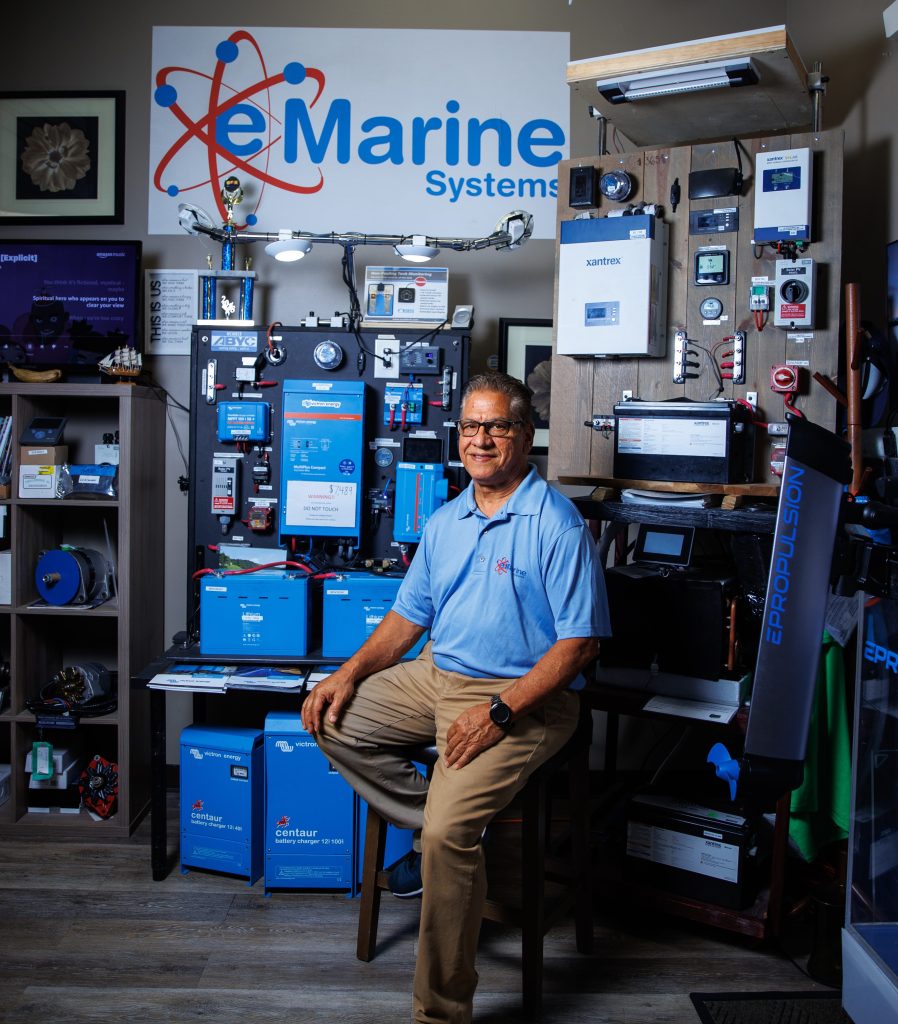
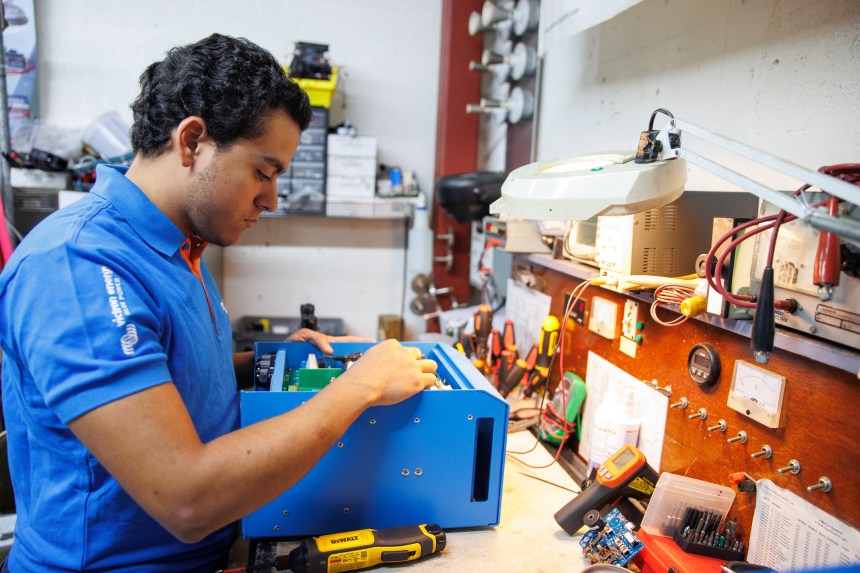
In addition to its U.S. customers, eMarine sells to clients in Canada, the British Virgin Islands, The Bahamas, Germany, the U.K., Mexico, Honduras, Colombia, Singapore, and Hong Kong, says Marron. Clients can buy equipment at eMarine’s headquarters, or order from overseas. Marron’s firm also manufactures two lines of products on-site: wind generator control panels for Ryse Energy, a company that specializes in renewable energy, and hardware kits for installing solar panels on soft surfaces. It also sells proprietary products that mitigate noise on wind turbine masts, which can be a nagging problem for sailboats. About 65% of eMarine’s clients are sailboat owners.
Marron, who also has an MBA, previously worked as an engineer at MSI, a Taiwanese multinational tech firm, and Intel. He formed RNW Energy Systems by purchasing the assets, brands, databases, and Internet platform from another marine equipment firm during the pandemic. “My team told me that I was crazy,” Marron says. “From my perspective, it was a significant risk, but I had much better bargaining power.” Marron’s gamble paid off: eMarine started with five employees and now has 12, with annual sales of $2 million and a solid portfolio of local and international clients.