While the State of Florida Enjoys most of the Trade and Investment with Germany, Miami is a Growing Hub for High-Tech and Startups
The German influence in South Florida can be seen everywhere, albeit invisible to most residents. Major brands like Aldi, Trader Joe’s, Porsche, Hugo Boss, and T-Mobile are all German companies.
But the German presence goes well beyond these well-known names, permeating sophisticated industries such as aviation and biotechnology. Take the Max Planck Florida Institute for Neuroscience (MPFI), established in 2009 in Palm Beach County as North America’s first and only Max Planck Institute. This initiative was part of then-Gov. Jeb Bush’s vision to transform the economy from being tourism-dependent by creating a life sciences cluster.

The Max Planck Institute’s facility in Jupiter, which hosts nine labs focusing on various aspects of brain science, collaborates closely with academic institutions like the University of Florida in the state’s center and Florida Atlantic University in Palm Beach County. “Collaboration is really the backbone of science, and just being able to have these international relationships opens up a lot of potential. Having relationships with Germany has been advantageous to us, it just really gives us the top technology and the top talent,” says Katie Edwards, Associate Vice President of Public Engagement for MPFI.
Edwards notes South Florida’s potential as a growth hub, compared to other well-established – and saturated – U.S. markets in Boston and California. “The economic conditions for moving to South Florida were very favorable, and the cost of living, even though it’s very high compared to the rest of the U.S., is still lower than Boston and California where major biotech hubs are,” says Edwards. “And you can’t beat the weather – it’s a beautiful place to live, which is a great recruiting tactic.”

Another German high-tech facility in Miami Customs District (i.e. South Florida) is PETNET Solutions Inc., a subsidiary of Siemens Healthineers and the leading producer of radiopharmaceuticals for PET scans in the United States. PETNET South Florida was opened in 2022 in Broward County’s Dania Beach, a 10,995-square-foot facility that is not only the largest among PETNET’s 43 locations but also boasts the highest production capacity. As one of three PETNET Solutions sites in Florida (alongside Jacksonville and Tampa), it manufactures drugs injected into patients for PET scans used in diagnosing cancers like breast and prostate cancer, as well as neurological disorders.
“South Florida is a function of data technology and IP that’s coming into the industry,” says Joshua Nutting, chief operating officer of PETNET Solutions Inc. “If you think about a hub and spoke model, the hub is the technology creation, and the spoke is South Florida – it’s the distribution arm of the technology that’s being created.”
German companies are also making strides in other areas of Miami’s economy, establishing footholds in diverse sectors. German-based SAP, a multinational software giant, operates its international branch in Miami. Airbus and Porsche have established their Latin American headquarters in the city, leveraging its global connectivity. The aviation and aerospace industry between both regions has been strong for decades, with the presence of German companies like DHL Express which also has its Latin American HQ in Broward, and Germany’s national carrier Lufthansa’s aircraft maintenance, repair, and overhaul (MRO) facility near Miami International Airport (MIA).
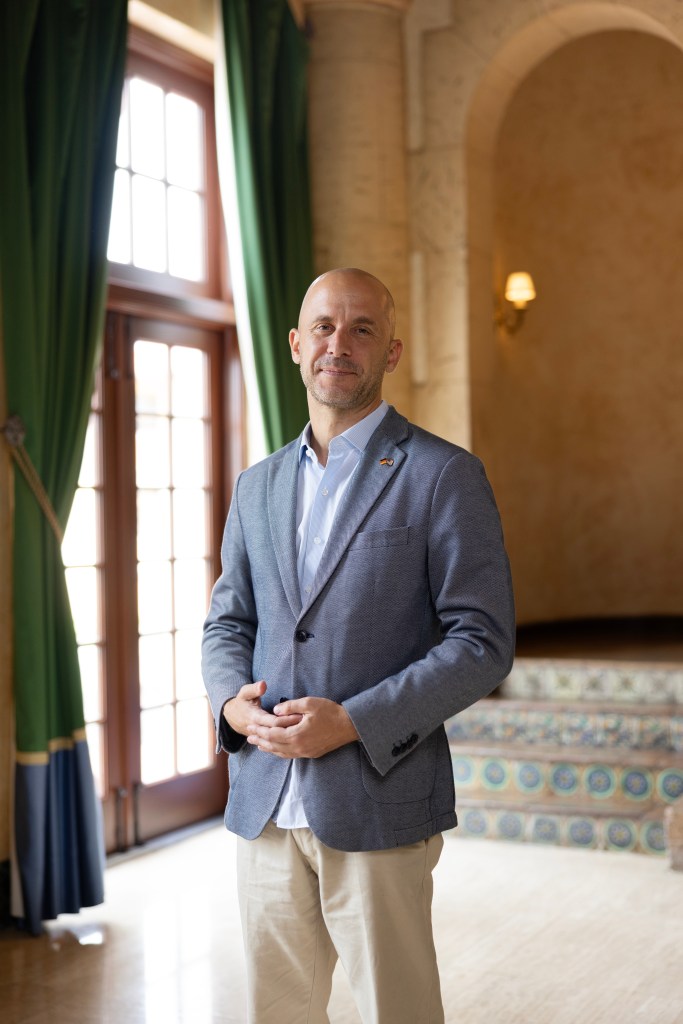
In the maritime sector, German-built cruise ships regularly dock at Miami’s ports, with German cruise line Sea Cloud Cruises announcing plans to establish an office in Fort Lauderdale. Technology startups such as Lilium and Volocopter are also making waves, pioneering advances in urban air mobility. “German companies love Miami as a hub for their global operations,” says the Consul General of Germany in Miami Christofer Burger.
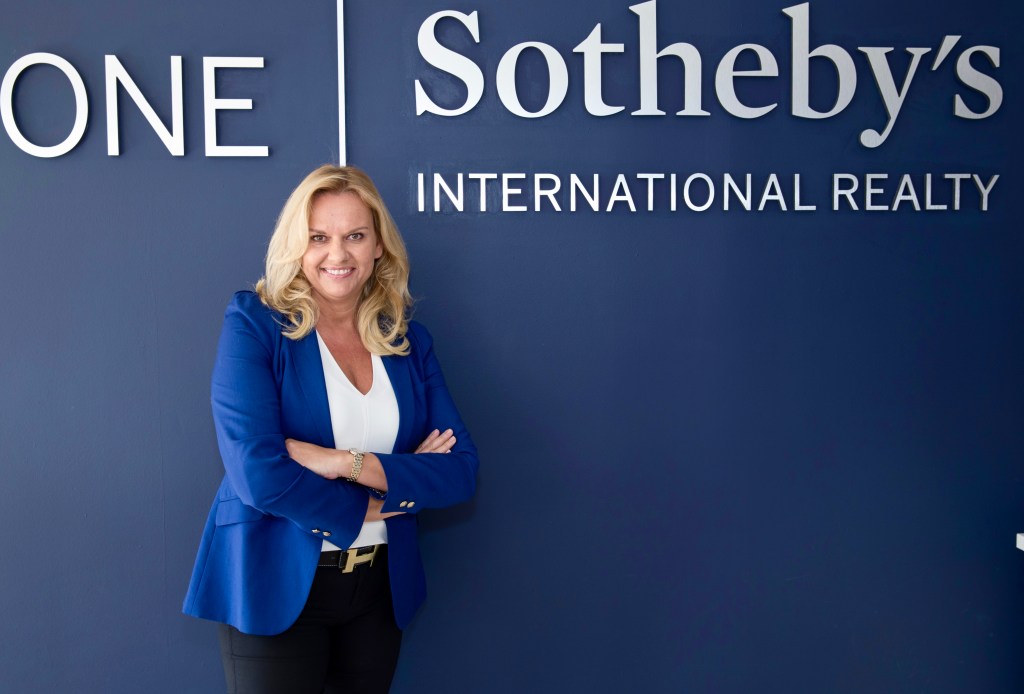
According to a report by the Miami Association of Realtors, Germany was the top source of global web searches for South Florida real estate last fall – constituting 9.3% of all inquiries for Miami real estate, surpassing Colombia. “Miami is Germany’s new Mallorca, Spain,” said Alexandra C. Peters, global real estate advisor for One Sotheby’s International Realty. “Now you’ve got direct flights and they’re [Germans] catching on to the rapid development of Miami.”
With three direct flights between MIA and Germany, more wealthy Germans are opting to make Miami their new home. “I have a couple of clients now that are working on getting their investor visa. So, they’re opening businesses and bringing their money here,” says Peters. The ‘investor visa’ or EB-5 visa program grants permanent residency in the U.S. to foreign investors who make a substantial investment in a U.S. business that creates jobs. “There are a lot of very wealthy people that are happy to put up $800,000 if they can live here and bring their whole family,” says Peters.
According to online databases of foreign-owned affiliates in Florida, some 90 German companies are operating more than 250 branch locations in Florida, many of them in South Florida. Additionally, recent statistics from the U.S. Bureau of Economic Analysis show Germany is the 3rd largest foreign direct investor in Florida by employment, with German-owned affiliates accounting for more than 37,300 jobs. Germany is also the #1 EU investor in Florida.
THE FLOW OF TRADE
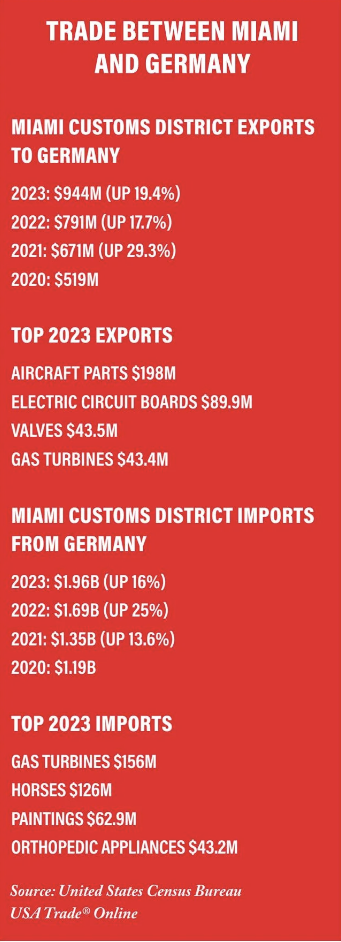
In terms of trade, the majority of last year’s $6.4 billion in bilateral merchandise moving between Florida and Germany was outside of South Florida, largely in the form of German cars through the Port of Jacksonville. Indeed, Germany was the state’s No. 1 trade partner in the EU in 2023, and the 8th largest partner overall. For the Miami Customs District, bilateral trade totaled $2.94 billion, increasing 35.4 percent from 2022 and making it the 14th largest trade partner overall. The bulk of Germany’s imports from Miami last year were high-tech products made in Florida, including aircraft engines and parts ($198M). Other significant exports to Germany included electronic control boards ($89.8M) and valves for pipes and tanks ($43.5M).
On the import side, the Miami District imported goods worth $1.96 billion from Germany with gas turbines ($156M) as the top category. Other leading imported goods include horses ($126M) and paintings ($62.9M).
Beyond the rise of trade, there is untapped potential for deeper economic integration between Germany and Miami. “New tech startups who want to enter the U.S. and the Latin American market see Miami as the perfect launchpad for this,” says Consul General Burger. “This is why we are optimistic about the newly announced climate-ready tech hub, especially given the substantial investments by German companies in climate technologies. There’s significant untapped potential, and we see momentum building in that direction.”
Miami-Dade’s ClimateReady Tech Hub is one of 31 Tech Hubs designated by the Department of Commerce’s Economic Development Administration (EDA) in October 2023. Miami’s tech hub will collaborate with public, private, academic, and philanthropic partners to advance climate-resilient technology in South Florida, and with this, industry leaders are expecting more German climatech companies to look to Miami.
“South Florida’s infrastructure is an important starting point when talking about climate resilience. German startups have a lot of interest in climate technology and are excelling because of their innovative nature. I think South Florida will be a critical market for these companies to really keep growing,” says Christian Jorg, COO of Americas Start2 Group. Start2Group is a business consultancy firm specializing in helping European companies expand into the American market.
Driven by the city’s vulnerability to climate change and supported by a dynamic entrepreneurial ecosystem, these ventures are working on a range of technologies, including renewable energy, water conservation, and resilient infrastructure. “The whole world looks to Miami as ground zero of the climate crisis, not only for the first indications of what’s to come but also as a place that can provide solutions,” says Consul General Burger. “And German companies are at the forefront of research and development for this. That sector will really bring a whole new dimension to the South Florida/ Germany relationship.”