


With Miami as a Critical Link, Latin American Nations look to Taiwan as the Model for Modernization
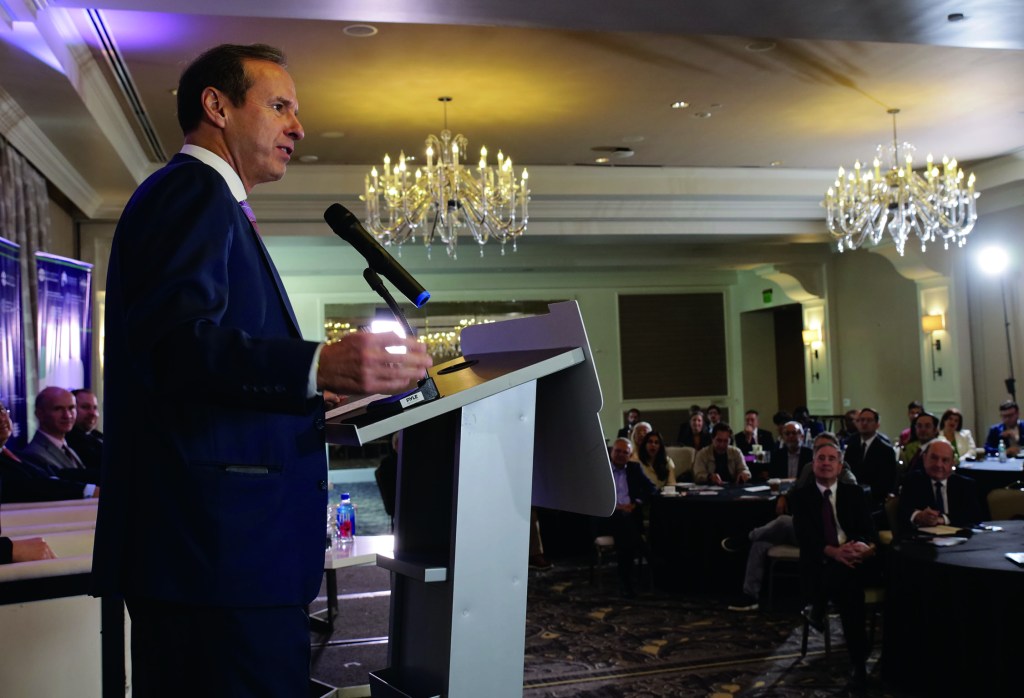
Held at the Colonnade Hotel in Miami’s affluent Coral Gables neighborhood last month, the forum, “Prospects for Greater Economic and Cultural Engagements: Latin America—USA—Asia-Pacific Region,” organized by the Latin American and Caribbean Presidential Mission, brought together former Latin American presidents, Taiwanese and Japanese officials, and industry experts to discuss the Asia-Pacific’s role in fostering global economic integration. In particular, emphasis was placed on Taiwan’s potential contributions to Latin America, both as an example and as a partner.
Latin America has traditionally relied on agriculture and raw material exports to power its economies, with growing investments in mining operations thereby mainland China. But, as the conference made clear, Latin America needs to be more than just a supplier of metals like copper and lithium. Consequently, it is now exploring avenues to diversify and modernize its economies, and speakers pointed out that Latin American countries can adopt strategies similar to Taiwan’s remarkable transformation over the past few decades from an agrarian economy to a high-tech powerhouse.
“I do not think people understand the necessity and dependence of Taiwanese products and companies. Everybody knows about Apple, Amazon, Facebook, and Tesla, but not many know about Foxconn and TSMC, two companies from Taiwan, that the world would not work without,” says former President of Bolivia Jorge Fernando Quiroga at the Latin American and Caribbean Presidential Mission’s forum.
UNDERSTANDING TAIWAN’S SOFT POWERS
To understand the potential of Latin America, one need only look at how Taiwan’s semiconductor manufacturing capabilities have given it significant soft economic power, overshadowing the island nation’s geopolitical tensions with neighboring Communist China.
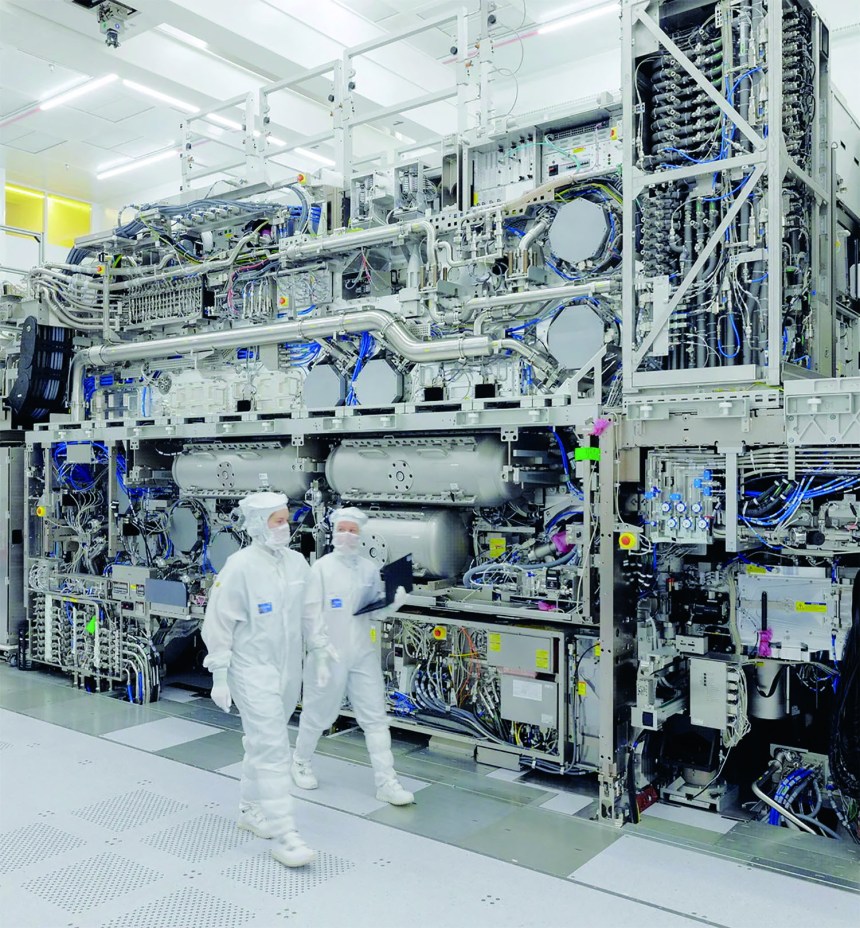
If you drive an hour south of Taiwan’s capital city of Taipei, you’ll find yourself at the sprawling 1,400-hectare Hsinchu Science Park, adorned with massive buildings displaying the logos of some of the world’s leading chip manufacturers. One includes the world’s most valuable chip company, Taiwan Semiconductor Manufacturing Co (TSMC), one of about 500 tech firms that have established their presence in Taiwan’s Silicon Valley.

Semiconductors are essential components in modern electronics, used to power everything from smartphones and computers to cars, medical devices, and microwaves. With a 68 percent market share, Taiwan is a global leader in the semiconductor industry, accounting for 92 percent of the world’s most advanced chip manufacturing capacity. TSMC alone produces nearly 90 percent of the world’s most advanced chips. They’re the firm behind all of Apple’s custom chips, also supplying CPUs (central processing unit) and GPUs (graphics processing unit) for Apple, Nvidia, Qualcomm, and more. “Even U.S. firms like Nvidia are visiting Taiwan to learn from the semiconductor masters. In a recent presentation on June 3rd, Nvidia CEO Jensen Huang thanked Taiwan for the partnership, stating, ‘Taiwan and our partnership have created the world’s AI infrastructure,’” says Director General Charles Chou of the Taipei Economic and Cultural Office in Miami. As a significant driver of Taiwan’s economy, semiconductors contribute approximately 15 percent of the country’s $770 billion GDP and employ over 70,000 people. What drives the industry isn’t in the tech itself but in the people behind it. A perfect example is Stanford-educated Miin Wu, who began his career in California’s Silicon Valley. Like many, Taiwanese talent usually leaves home for the U.S. to work, creating a ‘brain drain.’ Wu instead wanted the brain power back in Taiwan. So he convinced 28 Taiwanese engineers to participate in a “reverse brain-drain” raising enough venture capital to return to Taiwan and establish Macronix International Co., Ltd. to manufacture high-end computer chips. Today, Macronix is worth almost $2 billion and supplies chips for Nintendo gaming consuls, e-cars, and Nike’s smart fit devices.
Taiwan is thriving with similar high-tech ventures, closely resembling a Pacific counterpart to Silicon Valley. This contrasts sharply with countries like Japan and Korea, whose late 20th-century economic booms were driven by large-scale manufacturing. Instead of producing a wide range of products, Taiwanese firms typically specialize in one or two value-added high-tech areas, such as computer technology, and excel at them.

Macronix also produces semiconductor chips used in drones that both Russia and Ukraine have adopted in their conflict. Wu says he is uninterested in the political implications and would sell these products to China if it were allowed, something that trade restrictions now prevent. Previously, Macronix supplied chips to the Chinese telecommunications giant Huawei.
Macronix isn’t the largest semiconductor manufacturer but stands out for its innovation and advanced research and development capabilities. Its influence on the industry stems from a pivotal manufacturing innovation. When Macronix was founded, Japanese companies dominated the market with their disciplined and experienced operations. To gain a competitive advantage, Wu computerized all manufacturing processes, an innovative move at the time. This allowed Macronix to collect data on how minor changes in semiconductor geometry could impact performance. Such cutting-edge techniques are a significant factor in Taiwan’s leading position in the semiconductor industry today.
THE LATIN LINK
The lessons of Taiwan’s prowess in high tech have not been entirely lost on Latin America. Mexico, for example, has been increasingly involved in electronics manufacturing, contributing to the production of goods such as televisions and smartphones. In the current context, however, it is the demand for semiconductors that has surged globally, driven by the proliferation of technologies like 5G, artificial intelligence, and electric vehicles. Latin American nations, by partnering with Taiwan, can capitalize on this trend, and Taiwan’s Industrial Technology Research Institute (ITRI) has been working with several Latin American countries to transfer technology and provide training. Brazil and neighboring Paraguay in particular have shown interest in developing such a semiconductor industry.
In 2017, Paraguay’s former Minister of Industry and Commerce, Gustavo Leite, visited the Taiwan headquarters of Foxconn, one of the world’s leading contract manufacturers known for producing products like Apple’s smartphones and electric vehicles. “I told them ‘We want to manufacture and assemble iPhones in Paraguay’. They looked at me and said, ‘How many engineers speak English and Mandarin and are trained in electronics and industrial processes?’ so I said, ‘I’ll come back in five years,’” Leite recounts. Shortly after Leite returned to Paraguay, The Taiwan-Paraguay Polytechnic University (UPT) was established to develop engineering and technological talent in Paraguay. Taiwan is responsible for guiding the university’s development, while Paraguay is responsible for funding and constructing the campus.
“Now we have the fifth graduating class of engineers who speak Mandarin and English, trained in Paraguay with Taiwanese expertise,” says Leite. “President Pena announced the first factory for electric buses by a Taiwanese company in Paraguay. And now we’re in a position to return to Foxconn and say, ‘Hey, we’re ready. Look at us.’ We would like to use our energy to be the backup for Taiwan in terms of semiconductors, and we’re working on that.”
Statistics further highlight the growth potential. In 2020, Taiwan’s exports to Latin America amounted to $7.7 billion, demonstrating a growing economic interdependence. Moreover, Taiwanese firms have been increasingly investing in Latin American countries, with over 100 Taiwanese companies operating in Brazil alone.
THE MIAMI CONNECTION
Trade between Miami and Taiwan has also been on the rise, with Miami serving as a crucial cargo point for Taiwanese goods entering the Latin American market.
Over the past decade, the Port of Miami, often referred to as the “Cargo Gateway of the Americas,” has seen a substantial increase in Taiwanese imports, particularly in electronics, machinery, and high-tech components. In 2023, Miami imported over $713 million worth of goods from Taiwan, marking a significant increase from previous years. This surge is largely driven by the high demand for Taiwanese technology products and components essential for various industries. PortMiami and Evergreen Marine Corporation, a major Taiwanese shipping company, have also established regular shipping routes between Taiwan and Miami.
The economic ties between Miami and Taiwan extend beyond trade. Taiwanese companies are increasingly investing in Miami’s local economy, particularly in high-technology ventures. “Though Taiwan has few natural resources, we have invested heavily in our human resources. Such economic strength has played a pivotal role in fostering fruitful international relationships, particularly here in Miami,” says Director General Chou.
For Taiwan, its economic might through technological advancements has also given it a certain soft power on the global stage. Expertise in semiconductors and strategic investments in education and infrastructure abroad are pivotal to forging international alliances and enhancing its global relevance. While escalating geopolitical tensions could trigger a significant crisis, disruption in Taiwan’s semiconductor industry would severely impact the global economy, halting the production of electronic devices worldwide.
Wu, for one, is not worried. “As long as we can produce world-class technology, we can survive and continue to contribute to the status quo in Taiwan,” he says. “For now, we are so indispensable that even China and the United States fear a war against Taiwan that could destroy Macronix.”
Latin American nations would love to enjoy similar economic importance, but even with the best efforts that dream is still years away. Wu said he believes it would take other countries at least a decade to match Taiwan’s current level of semiconductor expertise. All the more reason for urgent action now.



